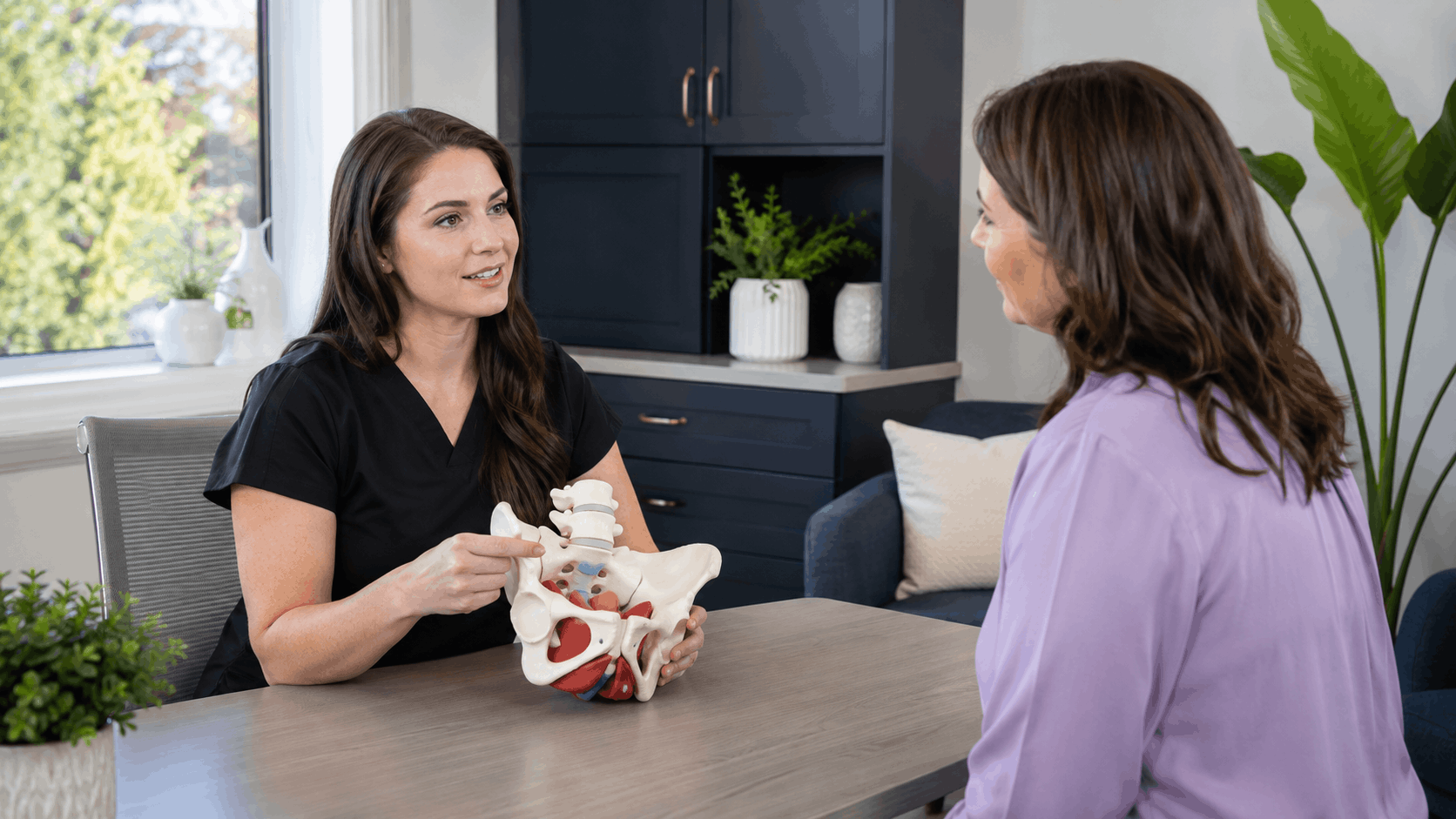

A laugh shouldn’t require a bathroom strategy. Neither should a sneeze, workout, or quick run across a parking lot.
Yet urinary leakage is a common concern for women, particularly after pregnancy and childbirth, with aging, or as pelvic floor function changes. For women dealing with mild symptoms, V-Tone urinary incontinence treatment offers a non-surgical approach focused on something fundamental: the pelvic floor muscles.
V-Tone uses electrical muscle stimulation to produce pelvic floor contractions and support neuromuscular re-education. The FDA cleared the InMode System with the vTone applicator for rehabilitation of weak pelvic floor muscles in the treatment of stress, urge, and mixed urinary incontinence in women.
So, can it help mild leakage?
For an appropriately selected patient with weak pelvic floor muscles contributing to urinary incontinence, V-Tone may be worth discussing. But urinary leakage has different causes, and the right first step is figuring out what type of incontinence you’re experiencing and why.
Jump To:
- Detailed Breakdown
- What Is V-Tone?
- Why Does the Pelvic Floor Matter for Bladder Control?
- What Type of Urinary Incontinence Can V-Tone Address?
- Stress Urinary Incontinence
- Urge Urinary Incontinence
- Mixed Urinary Incontinence
- How Does V-Tone Urinary Incontinence Treatment Work?
- Is V-Tone the Same as Doing Kegels?
- Who May Be a Good Candidate for V-Tone?
- What Should You Expect From Treatment?
- Is V-Tone Effective for Mild Urinary Incontinence?
- When Should Urinary Leakage Be Medically Evaluated?
- Can Hormonal Changes Affect Urinary Symptoms?
- Is V-Tone Worth Considering for Mild Leakage?
- Key Takeaways
- FAQs
TLDR – Quick Guide
Here’s what to know about V-Tone urinary incontinence treatment:
- What it is: A non-surgical treatment using electrical muscle stimulation.
- What it targets: Weak pelvic floor muscles involved in urinary control.
- FDA clearance: The InMode System with vTone applicator is cleared for rehabilitation of weak pelvic floor muscles for stress, urge, and mixed urinary incontinence in women.
- Stress incontinence: Leakage associated with pressure on the bladder, such as coughing, sneezing, laughing, or physical activity.
- Urge incontinence: Leakage associated with a sudden, difficult-to-control urge to urinate.
- Mixed incontinence: A combination of stress and urge symptoms.
- Does it replace evaluation? No. Urinary leakage can have different causes, so treatment should match the diagnosis.
- Is it surgery? No. V-Tone uses a vaginal applicator to deliver electrical stimulation rather than a surgical procedure.
Bottom line: V-Tone urinary incontinence treatment may help women whose symptoms involve weak pelvic floor muscles, but determining the type and cause of leakage comes first.
Detailed Breakdown
What Is V-Tone?
V-Tone is a pelvic floor rehabilitation treatment available at Mirabile M.D..
The technology uses a vaginal applicator to provide electrical stimulation. That stimulation causes pelvic floor muscle contractions with the goal of neuromuscular re-education and rehabilitation of weakened pelvic floor muscles.
This isn’t simply a wellness claim attached to an electrical device.
The FDA’s 510(k) database identifies the InMode System with vTone Applicator as a non-implantable electrical stimulator for incontinence. Its cleared intended use specifically includes electrical stimulation and neuromuscular re-education for rehabilitation of weak pelvic floor muscles in women with stress, urge, and mixed urinary incontinence.
That gives V-Tone urinary incontinence treatment a clearly defined purpose: working with pelvic floor muscle function.
Why Does the Pelvic Floor Matter for Bladder Control?
The pelvic floor is a group of muscles and supporting tissues at the base of the pelvis.
These muscles contribute to several important functions, including support and urinary control. When pelvic floor muscles become weak or aren’t functioning effectively, leakage can become more likely.
Weakness may be associated with factors such as pregnancy, childbirth, aging, and other physical changes.
But not every bladder-control problem is simply a “weak pelvic floor.”
That’s why an assessment matters before treatment begins.
Mirabile M.D. offers broader urinary incontinence and pelvic floor treatments that can be considered according to the type of symptoms and individual circumstances.
What Type of Urinary Incontinence Can V-Tone Address?
The FDA-cleared indication for the InMode System with vTone applicator covers stress, urge, and mixed urinary incontinence in women.
Understanding those categories can make the treatment conversation much clearer.
Stress Urinary Incontinence
Stress urinary incontinence occurs when physical pressure or “stress” on the bladder contributes to leakage.
You might notice it when:
- Coughing
- Sneezing
- Laughing
- Running
- Jumping
- Exercising
- Lifting something heavy
If you’ve ever crossed your legs before a sneeze because experience taught you to, you already understand the practical impact.
For women whose stress leakage involves weak pelvic floor muscles, strengthening and rehabilitating those muscles may form part of the treatment strategy.
Urge Urinary Incontinence
Urge incontinence looks different.
Instead of leakage occurring mainly with a cough or jump, you may experience a sudden, strong urge to urinate followed by involuntary leakage.
Some people describe it as going from “I’m fine” to “I need a bathroom immediately.”
Because urge symptoms and stress symptoms aren’t identical, it’s useful to tell your provider exactly when leakage happens, rather than simply saying you have bladder problems.
Mixed Urinary Incontinence
Mixed urinary incontinence involves features of both stress and urge incontinence.
For example, someone may leak when exercising but also experience episodes of intense urinary urgency.
V-Tone’s FDA-cleared indication includes mixed urinary incontinence when the treatment is being used to rehabilitate weak pelvic floor muscles.
Again, the diagnosis matters.
The same symptom—leakage—doesn’t always mean the same thing is happening underneath.
How Does V-Tone Urinary Incontinence Treatment Work?
The V-Tone applicator delivers electrical stimulation to the pelvic floor muscles.
Electrical stimulation can cause muscles to contract. The FDA explains more generally that applying electrical current to muscles can produce contraction and that repeated stimulation may be used for muscle re-education and rehabilitation in appropriate medical applications.
For V-Tone specifically, the FDA clearance describes a biphasic electrical waveform delivered through the applicator for pelvic floor rehabilitation.
During treatment, stimulation settings can be adjusted according to the prescribed treatment parameters and patient response.
The important distinction is that V-Tone urinary incontinence treatment isn’t physically adding support or surgically altering anatomy.
It works through electrical stimulation of pelvic floor musculature.
Is V-Tone the Same as Doing Kegels?
Not exactly.
Pelvic floor exercises—often called Kegels—require you to intentionally identify and contract the appropriate muscles. V-Tone uses electrical stimulation to produce pelvic floor muscle contractions and support neuromuscular re-education.
The approaches therefore aren’t identical.
One practical challenge with pelvic floor exercises is that simply being told “do your Kegels” doesn’t guarantee you’re contracting the correct muscles or using an appropriate program.
Depending on the cause and severity of urinary symptoms, a healthcare professional may recommend pelvic floor exercises, supervised pelvic floor therapy, behavioral changes, electrical stimulation, medication, another procedure, or a combination of approaches.
V-Tone is one option—not the entire urinary incontinence toolbox.
Who May Be a Good Candidate for V-Tone?
A woman with urinary leakage and weakened pelvic floor muscles may be a potential candidate for V-Tone urinary incontinence treatment after appropriate evaluation.
Symptoms worth discussing can include:
- Leakage when coughing or sneezing
- Leakage while laughing
- Leakage during exercise
- Urinary urgency
- Difficulty reaching the bathroom before leakage occurs
- A combination of stress and urge symptoms
- Pelvic floor weakness following pregnancy or childbirth
- Changes in urinary control over time
Mild symptoms still deserve attention.
You don’t need to wait until leakage significantly disrupts daily life before mentioning it to a healthcare professional.
Mirabile M.D. offers a dedicated Urinary Incontinence Treatment pathway for women looking to discuss their symptoms and available options.
What Should You Expect From Treatment?
Because V-Tone uses electrical stimulation rather than surgery, treatment doesn’t involve incisions.
A vaginal applicator is used to deliver controlled electrical stimulation, creating pelvic floor muscle contractions. Treatment intensity can be adjusted according to individual response and the prescribed protocol.
Your provider should explain:
- What treatment feels like
- How long appointments take
- How many sessions are recommended
- What changes are realistic
- When results should be assessed
- Whether additional pelvic floor strategies are appropriate
Avoid assuming that one session should permanently eliminate urinary leakage.
Pelvic floor rehabilitation is better understood as a treatment process, and individual response can vary.
Is V-Tone Effective for Mild Urinary Incontinence?
The FDA clearance establishes that the InMode System with vTone applicator can legally be marketed for rehabilitation of weak pelvic floor muscles for treatment of stress, urge, and mixed urinary incontinence in women.
However, “FDA cleared” shouldn’t be translated into “guaranteed to stop every woman’s leakage.”
The success of V-Tone urinary incontinence treatment depends on factors including the underlying cause of symptoms, severity, pelvic floor function, adherence to the treatment plan, and individual response.
Electrical stimulation is an established modality within pelvic floor rehabilitation, but urinary incontinence can involve more than muscle weakness alone.
That’s why the question isn’t simply:
“Does V-Tone work?”
It’s:
“Is V-Tone appropriate for the reason I’m leaking?”
When Should Urinary Leakage Be Medically Evaluated?
Urinary leakage may be common, but that doesn’t mean you should automatically diagnose yourself or assume pelvic floor weakness is responsible.
A healthcare professional can help distinguish stress, urge, mixed, and other urinary symptoms while considering whether further evaluation is appropriate.
It’s particularly important to seek medical advice when urinary symptoms are new, changing, severe, associated with pain or other concerning symptoms, or significantly affecting your quality of life.
You should also tell your provider about:
- Pregnancy status
- Previous pelvic surgery
- Urinary tract symptoms
- Neurological conditions
- Implanted electronic medical devices
- Current medications
- Previous pelvic floor treatments
- Relevant gynecological history
Electrical stimulation isn’t appropriate for everyone, so medical history matters.
Can Hormonal Changes Affect Urinary Symptoms?
Urinary and pelvic symptoms can sometimes change around perimenopause and menopause as hormone levels and tissues of the genitourinary tract change.
But urinary leakage shouldn’t automatically be assumed to be “just hormones.”
The type of incontinence and the person’s broader health still need to be considered.
Mirabile M.D. offers Hormone Therapy for Women as a separate service for appropriately selected patients. Hormone therapy and V-Tone have different purposes, and hormone treatment should not be presented as a universal solution for urinary incontinence.
If urinary changes are occurring alongside menopausal symptoms, discussing the full picture with a healthcare professional may help determine which concerns are related and which need separate treatment.
Is V-Tone Worth Considering for Mild Leakage?
If you’re experiencing mild urinary leakage and pelvic floor weakness is contributing to the problem, V-Tone urinary incontinence treatment may be worth discussing.
Its advantage is straightforward: it provides a non-surgical method of stimulating and rehabilitating weak pelvic floor muscles, and the InMode system with vTone applicator has FDA clearance specifically covering stress, urge, and mixed urinary incontinence in women.
But it isn’t a reason to skip diagnosis.
The best treatment for urinary leakage depends on why the leakage is happening.
If you’re leaking during workouts, sneezes, laughter, or moments of sudden urgency, you don’t have to normalize the problem simply because it’s mild.
Start by talking about it.
Key Takeaways
- V-Tone urinary incontinence treatment uses electrical stimulation to produce pelvic floor muscle contractions and support neuromuscular re-education.
- The InMode System with vTone applicator is FDA cleared as a non-implantable electrical stimulator for incontinence.
- Its cleared intended use includes rehabilitation of weak pelvic floor muscles for stress, urge, and mixed urinary incontinence in women.
- Stress incontinence commonly involves leakage during activities such as coughing, sneezing, laughing, or exercise.
- Urge incontinence involves sudden urinary urgency that may be followed by involuntary leakage.
- Mixed incontinence includes symptoms of both stress and urge incontinence.
- V-Tone isn’t the same as performing pelvic floor exercises on your own because it uses electrical stimulation to produce muscle contractions.
- FDA clearance does not mean every patient is guaranteed to become completely symptom-free.
- Urinary leakage can have different causes, making an appropriate evaluation important before choosing treatment.
- Hormonal changes may occur alongside urinary symptoms, but hormone therapy and V-Tone are separate treatments with different purposes.
- Mild leakage is still worth discussing rather than waiting for symptoms to become more disruptive.
- Mirabile M.D. can evaluate urinary and pelvic floor concerns and discuss whether V-Tone or another treatment approach is appropriate.
FAQs
1. Can V-Tone help mild urinary incontinence?
V-Tone urinary incontinence treatment is designed to provide electrical stimulation and neuromuscular re-education for weak pelvic floor muscles. The InMode system with vTone applicator is FDA cleared for treating stress, urge, and mixed urinary incontinence in women through pelvic floor rehabilitation. Whether it will help an individual patient depends on the type and underlying cause of her symptoms.
2. Does V-Tone work for leaking when I cough or sneeze?
Leakage associated with coughing, sneezing, laughing, or physical activity is commonly associated with stress urinary incontinence. Stress urinary incontinence is included within the FDA-cleared indication for the InMode system with vTone applicator when rehabilitating weak pelvic floor muscles. An evaluation can determine whether pelvic floor weakness is contributing to your specific symptoms.
3. Is V-Tone the same as Kegel exercises?
No, although both approaches involve the pelvic floor muscles. Kegel exercises require voluntary pelvic floor contractions, while V-Tone uses electrical stimulation to cause contractions and support neuromuscular re-education. A healthcare professional may determine whether one or multiple pelvic floor strategies are appropriate for you.
4. Is V-Tone urinary incontinence treatment surgical?
No, V-Tone urinary incontinence treatment is non-surgical and uses a vaginal applicator to provide electrical muscle stimulation. It doesn’t require surgical incisions or implantation of a device. Your provider should still review your medical history and explain whether electrical stimulation is appropriate before treatment.
5. How do I know if V-Tone is right for me?
Start with an evaluation of when leakage occurs, how often it happens, and whether you experience stress, urge, or mixed symptoms. V-Tone may be considered when weak pelvic floor muscles are contributing to urinary incontinence, but it isn’t automatically appropriate for every cause of leakage. A professional assessment can help determine whether V-Tone, another pelvic floor treatment, or a different medical approach better fits your symptoms.