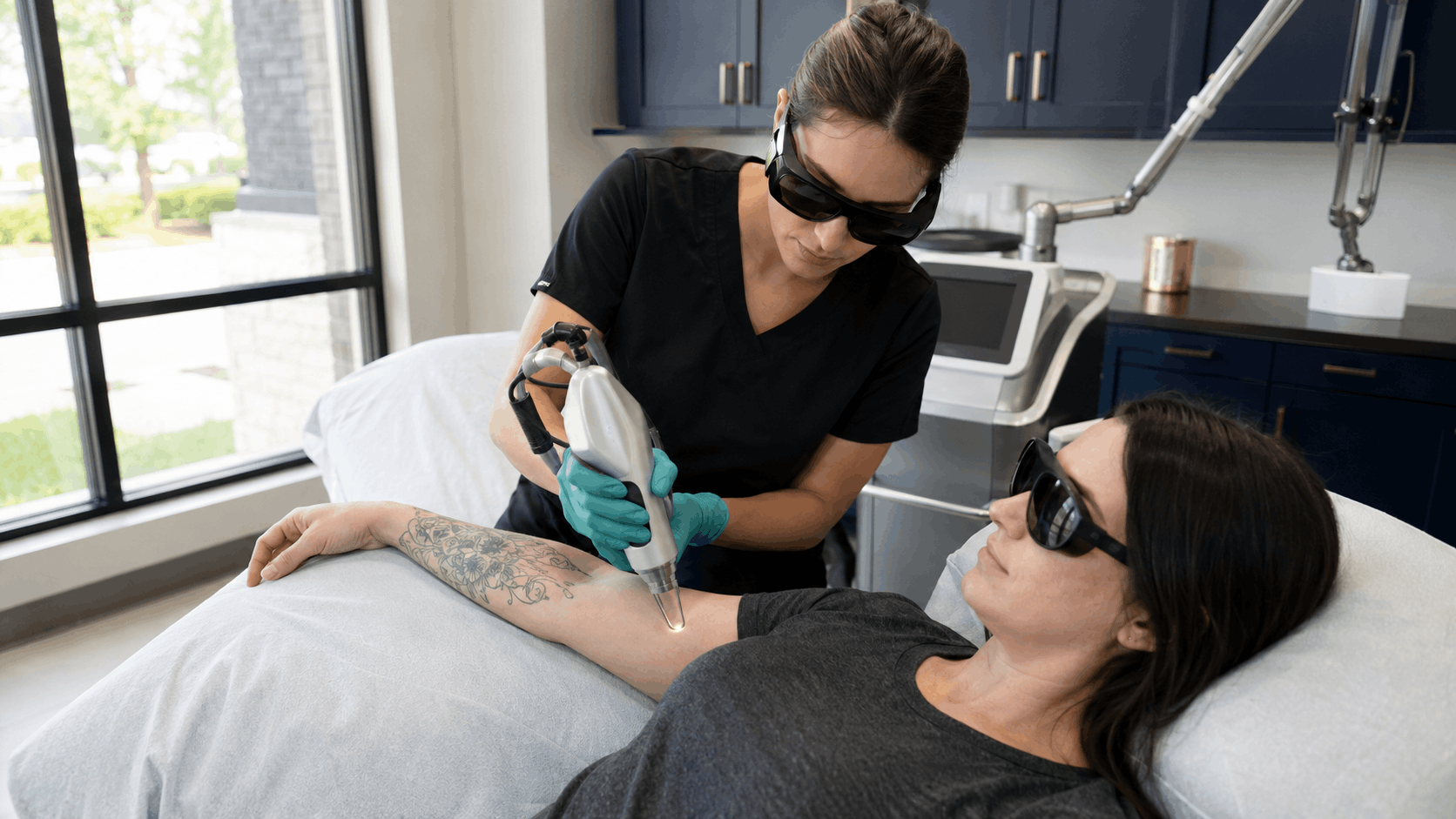

Whether it’s a tattoo that no longer reflects your style or one tied to a chapter of life you’ve moved beyond, laser tattoo removal offers a safe and effective way to fade or eliminate unwanted ink. One of the most common questions patients ask before beginning treatment is, “How many sessions will I need?”
The answer isn’t the same for everyone. Several factors influence the number of tattoo removal sessions, including the tattoo’s size, colors, age, location, and even your body’s natural healing process. Understanding these factors can help set realistic expectations and prepare you for your tattoo removal journey.
Jump To:
TLDR – Quick Guide
- Most tattoos require multiple tattoo removal sessions for optimal results.
- The number of treatments depends on the tattoo’s size, colors, depth, age, and placement.
- Pico laser technology breaks ink into tiny particles that your body naturally removes.
- Treatments are spaced several weeks apart to allow proper healing.
- A consultation with an experienced provider helps determine your personalized treatment plan.
Detailed Breakdown
Why Multiple Tattoo Removal Sessions Are Necessary
Unlike getting a tattoo, removing one isn’t completed in a single appointment.
Laser tattoo removal works by breaking ink particles into tiny fragments. Your immune system then gradually clears these particles from the body over several weeks. Because only a portion of the ink can be treated safely during each visit, multiple tattoo removal sessions are necessary to achieve significant fading or complete removal.
Patience is essential, but each session brings you closer to your desired result.
What Determines the Number of Tattoo Removal Sessions?
Several factors affect how many treatments you’ll need.
Tattoo Size
Larger tattoos naturally contain more ink and require additional sessions compared to smaller designs.
For example:
- Small tattoos may require fewer treatments.
- Medium-sized tattoos often need several sessions.
- Large or full-sleeve tattoos typically require the longest treatment plans.
Ink Colors
Not all tattoo pigments respond equally to laser treatment.
Black ink is generally the easiest to remove because it absorbs laser energy efficiently. Dark blue and brown inks also respond well, while colors such as green, turquoise, yellow, and fluorescent shades often require additional treatments.
Age of the Tattoo
Older tattoos frequently fade over time due to natural sun exposure and your body’s immune response.
Because some pigment has already broken down, older tattoos may respond faster than newer tattoos that still contain dense, vibrant ink.
Ink Depth and Density
Professional tattoos typically contain more ink deposited deeper into the skin than amateur tattoos.
As a result, professionally applied tattoos often require more sessions to achieve complete removal.
Tattoo Location
The location of your tattoo also matters.
Areas with strong blood circulation, such as the chest or upper back, often heal more efficiently than locations farther from the heart, including the hands, feet, and lower legs.
How Pico Laser Technology Improves Tattoo Removal
Modern laser technology has significantly improved tattoo removal outcomes.
At Mirabile M.D., advanced Tattoo Removal treatments utilize laser technology designed to target unwanted ink while minimizing damage to surrounding skin.
The Pico Genesis Laser delivers ultra-short pulses of energy that shatter tattoo pigment into microscopic particles. These smaller particles are easier for your immune system to eliminate, making treatments more effective while promoting healthy skin recovery.
Typical Tattoo Removal Timeline
Although every patient is different, treatment generally follows a predictable schedule.
A typical timeline includes:
- Initial consultation and skin assessment
- First laser treatment
- Six to eight weeks of healing
- Follow-up treatment
- Continued fading between sessions
- Repeat until desired results are achieved
Spacing appointments appropriately allows your skin to recover while giving your body enough time to remove fragmented ink particles.
Why Healing Time Matters
Many patients wonder why treatments cannot be scheduled every few weeks.
Your body continues removing ink long after each appointment. Scheduling treatments too closely together doesn’t speed the process and may increase the risk of unnecessary irritation.
Allowing adequate healing between tattoo removal sessions helps maximize results while protecting your skin.
Can Every Tattoo Be Completely Removed?
Many tattoos can be dramatically faded or removed, but results vary depending on several factors.
These include:
- Ink composition
- Skin type
- Tattoo age
- Tattoo location
- Individual immune response
Some tattoos disappear almost completely, while others may leave faint traces or require additional treatments to reach the desired outcome.
Tips for Achieving the Best Results
Your aftercare routine plays an important role in treatment success.
To support optimal healing:
- Keep the treated area clean.
- Avoid excessive sun exposure.
- Follow all aftercare instructions.
- Stay hydrated.
- Maintain a healthy lifestyle to support your immune system.
- Attend all scheduled appointments.
Healthy healing allows your body to continue removing fragmented ink between sessions.
Why Choose Professional Tattoo Removal?
Laser tattoo removal should always be performed by experienced medical professionals using advanced technology.
Choosing a trusted practice such as Mirabile M.D. ensures your treatment plan is customized for your skin type, tattoo characteristics, and aesthetic goals. An experienced provider can also monitor your progress throughout each stage of the removal process to achieve the safest and most effective outcome.
If you’re ready to begin your tattoo removal journey, schedule a consultation through the Contact Us page to receive a personalized treatment plan.
You can also explore patient Reviews to learn about the experiences of others who have undergone aesthetic treatments at Mirabile M.D.
Key Takeaways
- Most tattoos require multiple tattoo removal sessions for effective fading or removal.
- The number of sessions depends on tattoo size, color, age, ink depth, placement, and your body’s healing response.
- Pico laser technology breaks ink into tiny particles that your immune system gradually eliminates.
- Treatments are spaced several weeks apart to allow proper healing and maximize results.
- Following aftercare instructions and maintaining a healthy lifestyle support successful tattoo removal.
- A personalized consultation provides the most accurate estimate of your treatment timeline.
FAQs
1. How many tattoo removal sessions will I need?
The number of tattoo removal sessions varies from person to person because every tattoo is unique. Factors such as tattoo size, ink colors, placement, and age all influence the treatment plan. During your consultation, your provider will estimate the number of sessions based on your individual tattoo.
2. How long should I wait between tattoo removal sessions?
Most providers recommend waiting approximately six to eight weeks between treatments. This allows your skin to heal properly while giving your immune system time to eliminate fragmented ink particles. Following the recommended schedule helps maximize your overall results.
3. Does Pico Genesis Laser remove all tattoo colors?
Pico Genesis Laser is highly effective for many tattoo colors, especially black and darker pigments. Some colors, such as green, yellow, and fluorescent inks, may require additional treatments because they respond differently to laser energy. Your provider will discuss realistic expectations during your consultation.
4. Can I speed up the tattoo removal process?
While you can’t dramatically accelerate the removal process, healthy habits can support your body’s natural healing response. Staying hydrated, avoiding smoking, protecting the treated area from the sun, and following aftercare instructions all contribute to better healing. Attending each scheduled appointment also helps keep your treatment plan on track.
5. Is laser tattoo removal safe?
When performed by trained medical professionals using advanced laser technology, laser tattoo removal is considered a safe and effective treatment. Temporary redness, swelling, and sensitivity are common after each session and typically resolve within several days. Your provider will explain potential side effects and proper aftercare before treatment begins.