
Your holiday outfit is ready. Your calendar is packed. Your makeup bag is stocked with everything you need for a little festive sparkle.
But what about your skin?
If you’re hoping for a smoother-looking complexion before a Christmas party, office celebration, or New Year’s Eve gathering, you may be considering Dermaplaning before a holiday party.
Dermaplaning is a professional exfoliation treatment that removes surface dead skin cells and fine facial hair, commonly called peach fuzz. The result is often skin that feels smoother and provides a more even surface for makeup.
And unlike treatments that require weeks of recovery, dermaplaning typically involves little downtime.
Still, timing matters.
For many people, scheduling dermaplaning approximately three to five days before a holiday party offers a practical balance between enjoying smoother skin and allowing temporary redness or sensitivity to settle.
If you’ve never tried dermaplaning, have sensitive skin, or are prone to irritation, booking earlier may be wiser.
Let’s break down the ideal treatment timeline, what to expect afterward, and how to keep your holiday glow from turning into an unexpected skincare emergency.
Jump To:
- Detailed Breakdown
- What Is Dermaplaning?
- When Should You Get Dermaplaning Before a Holiday Party?
- Why Is Three to Five Days Before an Event a Good Window?
- What Does Dermaplaning Feel Like?
- Does Dermaplaning Make Makeup Look Better?
- How Long Does the Dermaplaning Glow Last?
- Does Facial Hair Grow Back Thicker After Dermaplaning?
- Dermaplaning vs. HydraFacial: Which Is Better Before a Party?
- Can You Combine Dermaplaning With a HydraFacial?
- Is Dermaplaning Safe for Sensitive Skin?
- Can Dermaplaning Cause Breakouts?
- What Should You Avoid After Dermaplaning?
- Can You Wear Makeup After Dermaplaning?
- How Should You Prepare for a Dermaplaning Appointment?
- Is Dermaplaning Better Than a Chemical Peel Before a Party?
- What Other Facial Treatments Can You Schedule Before a Holiday Party?
- Should You Try Dermaplaning for the First Time Before a Big Event?
- Your Holiday Party Skin Prep Checklist
- Key Takeaways
- FAQs
TL;DR – Quick Guide
- Best time to book: Approximately three to five days before your holiday party.
- First-time patients: Consider scheduling five to seven days ahead, or testing the treatment well before a major event.
- What dermaplaning does: Removes surface dead skin cells and fine facial hair using a specialized blade.
- Main benefits: Smoother-feeling skin, a brighter-looking complexion, and a more even surface for makeup.
- Downtime: Usually minimal, although temporary redness, dryness, or sensitivity may occur.
- When results appear: Smoother skin is often noticeable immediately.
- How long results last: The exfoliating effect is temporary as skin cells and facial hair naturally return.
- What to avoid afterward: Harsh exfoliants, unnecessary friction, excessive sun exposure, and irritating skincare products.
- Important: Dermaplaning may not be suitable for active inflammatory acne, certain skin conditions, or irritated skin.
Detailed Breakdown
What Is Dermaplaning?
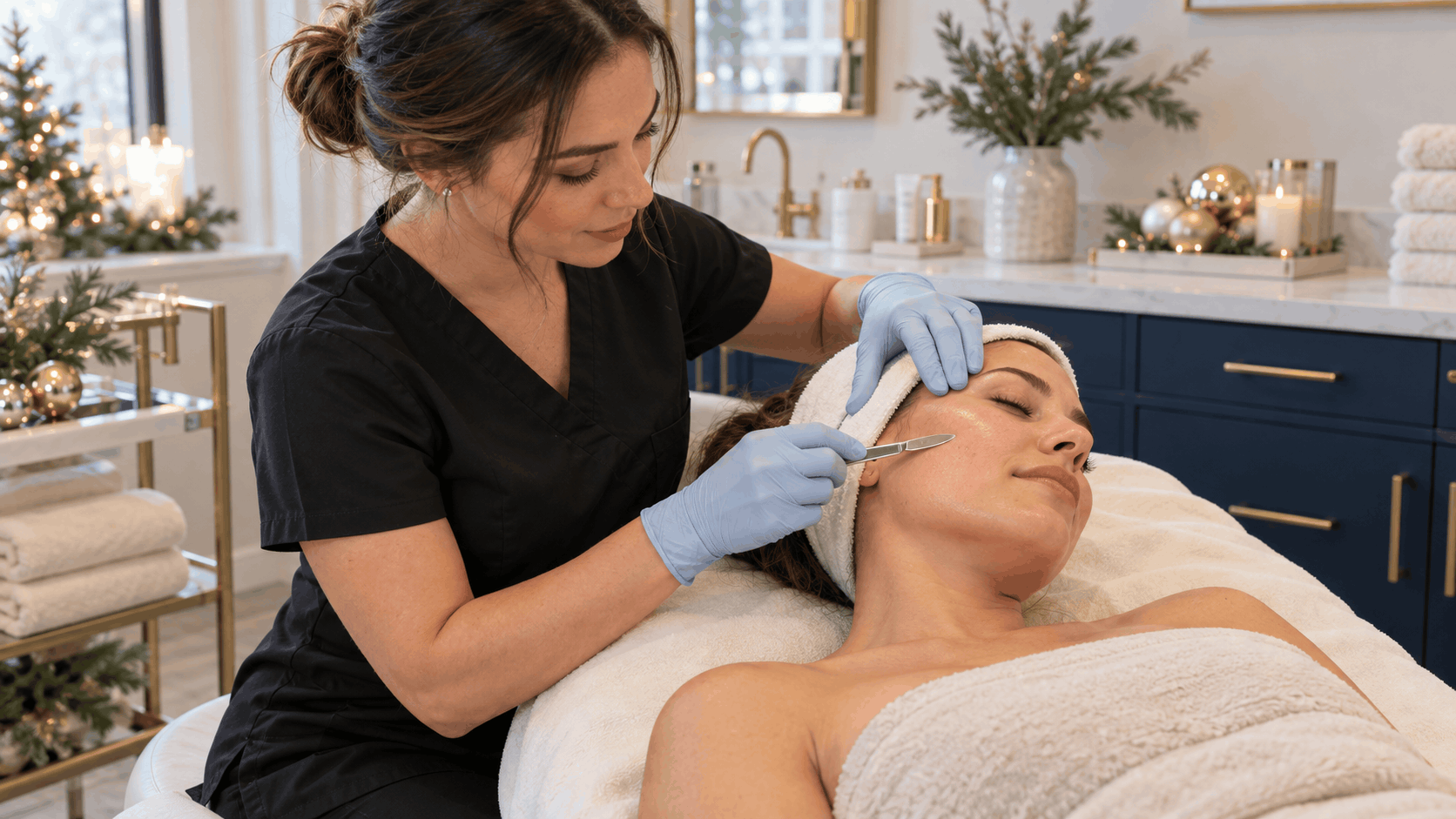
Dermaplane is a professional exfoliation treatment that uses a specialized sterile blade to gently remove surface dead skin cells and fine facial hair.
The treatment is performed by a trained provider who carefully moves the blade across the skin at an appropriate angle.
Dermaplaning primarily addresses the outermost layer of the skin.
It doesn’t penetrate deeply into the skin or require the recovery associated with more aggressive resurfacing procedures.
Common treatment goals include:
- Removing peach fuzz.
- Improving the feel of rough skin.
- Reducing visible surface buildup.
- Creating a smoother makeup application surface.
- Temporarily improving the appearance of dullness.
Think of dermaplaning as a surface refresh, not a complete skin transformation.
It can help your complexion look smoother, but it doesn’t erase deep wrinkles, eliminate pigmentation disorders, or permanently change skin texture.
When Should You Get Dermaplaning Before a Holiday Party?
For most patients who have tolerated the treatment previously, scheduling dermaplaning three to five days before an event is a reasonable approach.
This allows time for minor post-treatment sensitivity to settle while keeping the freshly exfoliated appearance relatively recent.
However, the ideal timing depends on your skin type and previous treatment experience.
Holiday Dermaplaning Scheduling Guide
| Time before your party | What to consider | General recommendation |
| 7+ days | Extra time to monitor skin response | Useful for first-time or sensitive-skin patients |
| 5–7 days | Good buffer for temporary redness or dryness | Conservative planning window |
| 3–5 days | Skin may feel smooth while minor sensitivity has time to settle | Practical choice for many returning patients |
| 1–2 days | Less time to recover if irritation develops | More unpredictable |
| Same day | Potential redness, sensitivity, or makeup discomfort | Generally best avoided before an important event |
These are planning guidelines rather than guarantees.
Some patients experience little to no visible reaction.
Others may develop redness, irritation, or small breakouts that take longer to resolve.
Why Is Three to Five Days Before an Event a Good Window?
Dermaplaning can produce an immediate smoother feel, but that doesn’t mean the best time to schedule it is an hour before your party.
There are several reasons to leave a buffer.
1. Temporary Redness Can Occur
Even gentle mechanical exfoliation may temporarily irritate the skin.
Some patients experience mild redness immediately after treatment.
This usually settles, but the timing varies.
2. Your Skin May Feel More Sensitive
Freshly exfoliated skin can be more reactive to certain products.
Applying strong skincare ingredients or heavy makeup immediately afterward may be uncomfortable.
3. You Have Time to Adjust Your Routine
A few days allows you to focus on gentle skincare and hydration before the event.
You can also identify whether any product is causing irritation.
4. You Avoid Last-Minute Surprises
A holiday party isn’t the ideal time to discover that your skin reacts poorly to a new treatment.
The goal is a smooth complexion for your event—not a last-minute attempt to calm unexpected redness.
What Does Dermaplaning Feel Like?
Dermaplaning is typically described as a gentle scraping or brushing sensation across the skin.
Most patients don’t require anesthesia.
You may feel:
- Light pressure.
- A soft scraping sensation.
- Gentle movement across the skin.
- Mild sensitivity in certain areas.
The treatment should not involve significant pain.
If you experience sharp discomfort, burning, or excessive irritation, tell your provider immediately.
A qualified professional should adjust or stop the procedure when appropriate.
Does Dermaplaning Make Makeup Look Better?
One reason people choose dermaplaning before a holiday party is the potential improvement in makeup application.
Fine facial hair and uneven surface buildup can sometimes affect how foundation sits on the skin.
By removing peach fuzz and surface dead skin cells, dermaplaning may create a smoother surface.
This can help:
- Foundation spread more evenly.
- Concealer appear less textured.
- Cream products blend more easily.
- Skin feel softer.
- Makeup look smoother in photographs.
However, results depend on your underlying skin texture and the products you use.
Dermaplaning won’t eliminate enlarged pores, deep acne scars, or significant textural irregularities.
And if your skin is irritated after treatment, makeup may actually feel less comfortable until it settles.
How Long Does the Dermaplaning Glow Last?
Dermaplaning results are temporary.
The skin naturally continues producing and shedding cells.
Fine facial hair also grows back over time.
Many people notice smoother-feeling skin for a period of days to several weeks, depending on their skin and hair growth.
However, there isn’t one exact duration that applies to everyone.
Factors that influence how long the results remain noticeable include:
- Natural skin cell turnover.
- Facial hair growth.
- Skincare routine.
- Environmental exposure.
- Skin condition.
- Frequency of treatment.
You don’t need to schedule dermaplaning every time you have an event.
Your provider can help determine an appropriate treatment frequency based on your skin’s needs.
Does Facial Hair Grow Back Thicker After Dermaplaning?
No, dermaplaning doesn’t biologically change the thickness, color, or growth rate of facial hair.
It removes hair at the skin’s surface.
When the hair grows back, the blunt end may temporarily feel different from its naturally tapered tip.
This can create the impression that the hair is coarser.
However, the follicle itself hasn’t changed.
Dermaplaning doesn’t convert fine vellus hair into thicker terminal hair.
Dermaplaning vs. HydraFacial: Which Is Better Before a Party?
If you’re comparing holiday facial treatments, you may also be considering a HydraFacial.
Both treatments may help improve the appearance of the skin before an event, but they use different techniques.
| Feature | Dermaplaning | HydraFacial |
| Primary method | Mechanical exfoliation with a blade | Device-based cleansing, exfoliation, extraction, and serum delivery |
| Removes peach fuzz | Yes | No |
| Main goal | Smoother surface and removal of fine facial hair | Cleansing, hydration, and improving the appearance of skin |
| Immediate appearance | Often smoother-looking skin | Often a more hydrated-looking complexion |
| Downtime | Usually minimal | Usually minimal |
| Potential reactions | Redness, sensitivity, irritation | Redness, sensitivity, or irritation |
| Best for | Surface roughness and peach fuzz | Selected concerns involving congestion, dullness, or dehydration |
| Ideal event timing | Several days ahead | Several days ahead, depending on skin response |
Neither treatment is automatically better for everyone.
Dermaplaning may be particularly appealing if peach fuzz and surface texture are your main concerns.
HydraFacial may be worth discussing if hydration and congestion are higher priorities.
For more information, explore HydraFacial vs. Dermaplaning.
Can You Combine Dermaplaning With a HydraFacial?
Some providers offer treatment plans that combine dermaplaning with other facial procedures.
However, combining exfoliating treatments isn’t automatically better.
Multiple procedures performed close together can increase the risk of:
- Redness.
- Dryness.
- Irritation.
- Skin sensitivity.
- Barrier disruption.
Whether treatments can be combined safely depends on your skin condition and the exact protocol.
If you’re preparing for a major holiday event, avoid experimenting with multiple unfamiliar treatments at the same appointment.
A conservative approach is often more predictable.
Is Dermaplaning Safe for Sensitive Skin?
Some people with sensitive skin tolerate dermaplaning well.
Others may experience irritation.
The treatment involves mechanical exfoliation, so existing skin conditions matter.
Dermaplaning may be inappropriate or require postponement if you have:
- Active inflammatory acne.
- Open wounds.
- Sunburn.
- Significant skin irritation.
- Certain active infections.
- An eczema or rosacea flare.
- Recently compromised skin from other treatments.
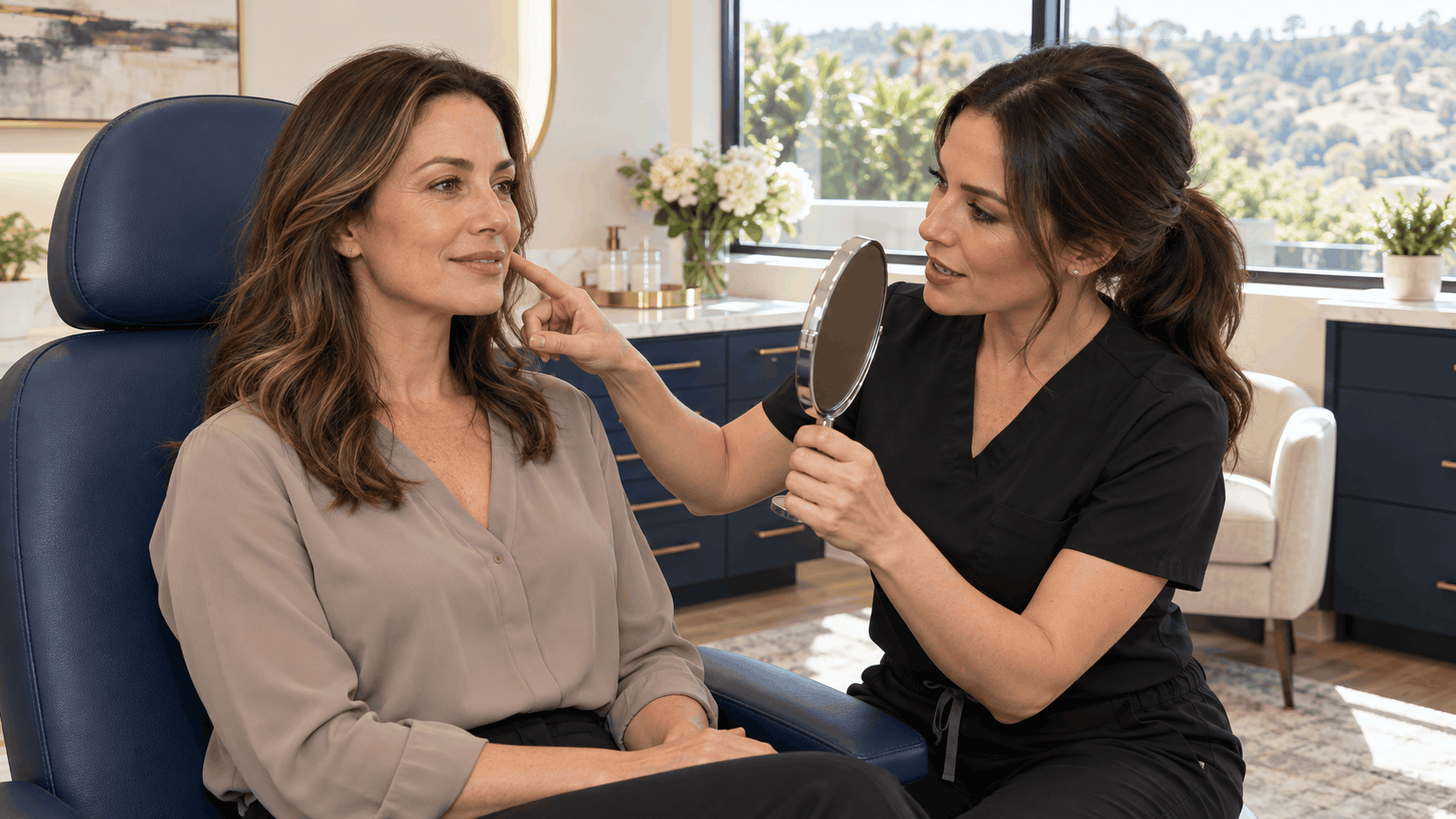
Your provider should assess your skin before treatment.
If you have a history of strong reactions to exfoliation, discuss this before booking.
Sensitive skin doesn’t always mean you must avoid dermaplaning, but it does mean your treatment plan should be individualized.
Can Dermaplaning Cause Breakouts?
Breakouts are possible after dermaplaning, although not everyone experiences them.
Potential contributing factors include:
- Existing acne.
- Skin irritation.
- Product sensitivity.
- Excessive friction.
- Inappropriate treatment over inflamed lesions.
- Poor hygiene or technique.
Dermaplaning isn’t an acne treatment, and it shouldn’t be performed over active inflamed acne lesions.
If you’re prone to breakouts, tell your provider before the procedure.
A different facial approach may be more appropriate for your skin.
What Should You Avoid After Dermaplaning?
Aftercare matters, especially when you’re trying to keep your skin calm before a holiday party.
Your provider should give you individualized instructions, but common precautions may include the following.
Avoid Harsh Exfoliants
Pause exfoliating scrubs, acids, or other potentially irritating products for the period your provider recommends.
Your skin has already undergone mechanical exfoliation.
Adding more exfoliation immediately afterward may increase irritation.
Avoid Retinoids Temporarily if Advised
Retinoids can sometimes increase sensitivity when used close to exfoliating treatments.
Ask your provider when to resume your usual products.
Protect Your Skin From the Sun
Use broad-spectrum sunscreen with SPF 30 or higher.
Freshly exfoliated skin may be more vulnerable to irritation from sun exposure.
Keep Your Skincare Gentle
Use a mild cleanser and an appropriate moisturizer.
Avoid introducing multiple new products immediately after treatment.
Don’t Pick or Scrub
If your skin feels dry or develops minor irritation, avoid aggressive rubbing.
Allow the skin to recover naturally.
For additional guidance, read Caring for Your Skin Before and After a Facial.
Can You Wear Makeup After Dermaplaning?
Makeup timing depends on your skin’s condition and your provider’s aftercare recommendations.
Some patients can resume makeup relatively soon.
Others may be advised to wait until temporary redness or sensitivity has settled.
If you plan to wear full-coverage foundation for a holiday party, scheduling dermaplaning several days beforehand gives your skin more time to recover.
When you do apply makeup:
- Use clean brushes and sponges.
- Avoid aggressive blending.
- Choose products your skin tolerates.
- Remove makeup gently.
- Moisturize appropriately.
Don’t force makeup application over visibly irritated skin.
How Should You Prepare for a Dermaplaning Appointment?
A little preparation can help make your treatment more comfortable.
1. Review Your Skincare Routine
Tell your provider if you use:
- Retinoids.
- Exfoliating acids.
- Acne medications.
- Prescription topical products.
- Strong exfoliating scrubs.
Ask whether any products should be paused before treatment.
2. Avoid Excessive Sun Exposure
Sunburned or irritated skin may not be suitable for dermaplaning.
Use sun protection leading up to your appointment.
3. Discuss Recent Treatments
Tell your provider about recent:
- Chemical peels.
- Laser treatments.
- Microneedling.
- Other exfoliating procedures.
- Cosmetic injections.
The timing between treatments can affect skin sensitivity.
4. Mention Skin Conditions
Disclose active acne, rosacea, eczema, infections, or unusual skin reactions.
Your provider can determine whether dermaplaning is appropriate.
5. Schedule With Recovery in Mind
Leave several days before your event.
If you’ve never had dermaplaning, consider testing it well before an important occasion.
Is Dermaplaning Better Than a Chemical Peel Before a Party?
Both are exfoliating treatments, but they work differently.
Dermaplaning physically removes surface dead skin cells and fine hair.
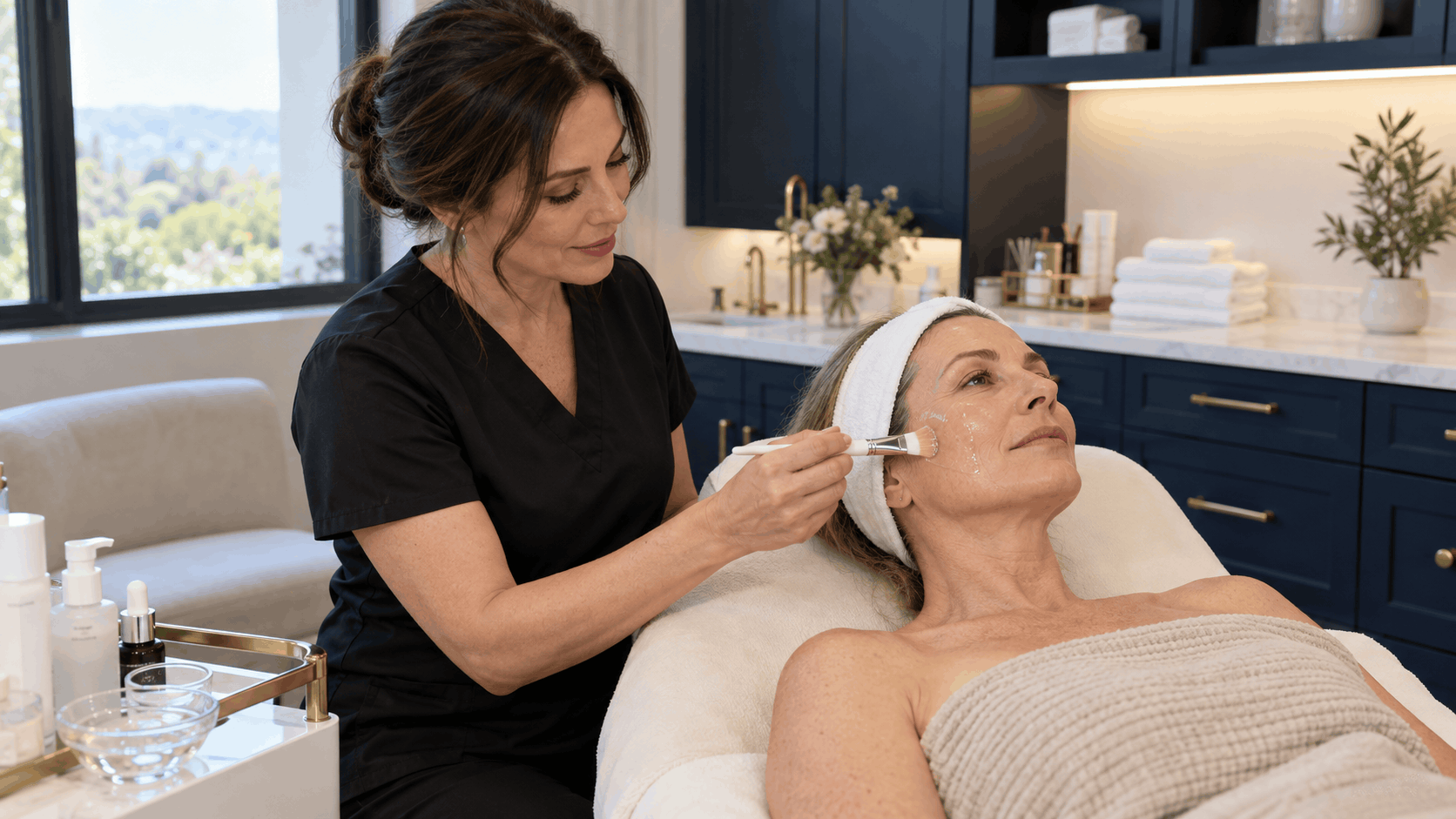
Chemical peels use specific chemical solutions to exfoliate the skin.
Peel intensity varies widely.
Some superficial peels may have limited downtime, while stronger peels can require more significant recovery.
For a last-minute event, treatment intensity and individual skin response matter more than the treatment name.
If you’re comparing options, explore Best Exfoliating Facial Treatments for Aging Skin.
What Other Facial Treatments Can You Schedule Before a Holiday Party?
Dermaplaning is one of several treatments people consider before special occasions.
Depending on your goals, a provider may discuss:
- Gentle facials.
- HydraFacial.
- Selected exfoliating treatments.
- Hydration-focused skincare.
- Other aesthetic procedures.
However, not every treatment is appropriate immediately before an event.
Some require longer recovery or produce gradual results.
A provider should help you choose a treatment based on your skin condition and the time available.
Mirabile M.D. offers a range of Facials & Lasers services for different aesthetic goals.
For broader event planning, read Best MedSpa Treatments to Prep for a Big Event.
Should You Try Dermaplaning for the First Time Before a Big Event?
If you’ve never had dermaplaning, be cautious about scheduling your first session immediately before an important party.
You don’t yet know how your skin will respond.
Some patients experience almost no irritation.
Others may notice redness, dryness, or breakouts.
If the event is particularly important, consider trying dermaplaning several weeks beforehand.
This gives you time to assess your skin’s response and decide whether to schedule another treatment closer to the event.
A holiday party is a great reason to refresh your skincare routine, but it’s not the best occasion for an unpredictable first-time experiment.
Your Holiday Party Skin Prep Checklist
Planning dermaplaning before a holiday party? Use this simple checklist.
One to two weeks before:
- Review your current skincare routine.
- Avoid unnecessary new products.
- Schedule your appointment.
- Discuss skin sensitivity and recent treatments.
Three to five days before:
- Have your dermaplaning treatment if appropriate.
- Follow your provider’s aftercare instructions.
- Keep skincare gentle.
- Use sunscreen.
One to two days before:
- Monitor your skin for irritation.
- Maintain hydration with a suitable moisturizer.
- Avoid aggressive exfoliation.
- Prepare clean makeup tools.
Party day:
- Cleanse gently.
- Apply moisturizer and sunscreen as appropriate.
- Use makeup products your skin already tolerates.
- Enjoy your event without introducing last-minute skincare surprises.
Key Takeaways
- Schedule dermaplaning before a holiday party approximately three to five days ahead: This gives temporary irritation time to settle.
- First-time patients should plan earlier: Consider five to seven days or more, depending on skin sensitivity and event importance.
- Dermaplaning removes surface dead skin cells and peach fuzz: It may create smoother-feeling skin and a more even makeup surface.
- Results are often noticeable quickly: However, they are temporary.
- Downtime is usually minimal: Redness, dryness, irritation, or breakouts are still possible.
- Aftercare matters: Avoid harsh exfoliants, protect your skin from the sun, and follow provider instructions.
- HydraFacial and dermaplaning serve different goals: One emphasizes cleansing and hydration, while the other removes surface buildup and fine facial hair.
- A personalized assessment helps: Skin sensitivity, active conditions, and treatment history influence suitability.
Ready to plan your holiday skincare appointment?
At Mirabile M.D., you can explore dermaplaning and other facial treatments to determine which approach fits your skin and event schedule.
A consultation can help you choose an appropriate treatment and leave enough time for your complexion to settle before the celebration.
Because your holiday glow should be the star of the party—not a surprise skincare reaction.
FAQs
1. How many days before a holiday party should I get dermaplaning?
Scheduling dermaplaning before a holiday party approximately three to five days ahead is a practical choice for many patients. This allows time for temporary redness or sensitivity to settle while the skin may still feel smooth. First-time patients or those with sensitive skin may prefer a longer buffer.
2. Can I get dermaplaning the day before a party?
Dermaplaning the day before a party may be tolerated by some patients, but it leaves little time for unexpected irritation to resolve. Redness, dryness, or sensitivity can occur even after a minimally invasive treatment. Scheduling several days earlier is generally a more predictable approach.
3. Does dermaplaning help makeup look smoother?
Dermaplaning removes surface dead skin cells and fine facial hair that can affect how makeup sits on the skin. This may help foundation and other products apply more evenly. Results vary depending on your skin texture, makeup products, and post-treatment sensitivity.
4. Is dermaplaning or HydraFacial better before a holiday event?
Dermaplaning may be preferable if peach fuzz and surface roughness are your main concerns. HydraFacial may be more appropriate if your goals involve hydration, cleansing, or selected congestion concerns. A provider can help determine which treatment suits your skin and event timeline.
5. How long does the glow from dermaplaning last?
Dermaplaning results are temporary because skin cells continue to turn over and fine facial hair naturally grows back. Many patients notice smoother-feeling skin for days to several weeks, although individual experiences vary. Gentle skincare and consistent sun protection can help maintain the appearance of healthy skin.