You’ve been noticing a little softness around your jawline. Maybe your cheeks don’t look quite as firm as they used to, or the skin on your neck seems less tight in photos.
You want a refreshed appearance, but surgery? Not exactly on your calendar.
That’s where Forma comes into the conversation.
Forma is a non-invasive radiofrequency treatment designed to heat selected layers of the skin and encourage tissue remodeling. It’s often considered by people interested in addressing mild skin laxity without surgical incisions.
But there’s one question almost everyone asks before booking:
How many Forma skin tightening sessions will you actually need before you see results?
Many treatment plans involve a series of approximately six to eight sessions, although some patients may be advised to have fewer or more. You might notice temporary firmness or a smoother appearance after an early appointment, but more meaningful changes generally develop gradually.
And no, one session won’t reliably erase years of skin aging.
Let’s explore how Forma works, what a typical treatment schedule looks like, and how to tell whether it’s the right approach for your skin.
Jump To:
- Detailed Breakdown
- What Is Forma Skin Tightening?
- How Does Forma Work?
- How Many Forma Skin Tightening Sessions Are Typically Needed?
- Forma Skin Tightening Sessions: What to Expect Over Time
- Can You See Results After One Forma Session?
- When Do Forma Results Become Noticeable?
- How Often Should You Schedule Forma Sessions?
- How Long Does Each Forma Session Take?
- What Does Forma Feel Like?
- Is There Downtime After Forma?
- Who Is a Good Candidate for Forma?
- Can Forma Tighten a Sagging Jawline?
- Can Forma Help With Neck Skin Tightening?
- Forma vs. Ultherapy: What's the Difference?
- Forma vs. a Surgical Facelift
- How Long Do Forma Results Last?
- Do You Need Maintenance Forma Sessions?
- Is Forma Safe for Every Skin Type?
- Can You Combine Forma With Other Facial Treatments?
- How to Prepare for Your Forma Treatment Series
- How to Track Your Forma Results
- What If You Don't See Results After Six Sessions?
- Is Forma Worth It for Mild Skin Laxity?
- Key Takeaways
- FAQs
TL;DR – Quick Guide
- Typical treatment series: Approximately six to eight Forma skin tightening sessions are commonly discussed, but recommendations vary.
- Session frequency: Treatments are often scheduled about one week apart, depending on the provider’s protocol.
- Early results: Some patients notice temporary firmness or a smoother-looking complexion after an initial session.
- More noticeable results: Changes may become more apparent over several sessions and the following weeks.
- How it works: Forma uses radiofrequency energy to heat tissue and encourage collagen-related remodeling.
- Best suited for: Selected patients with mild skin laxity who want subtle, non-surgical improvement.
- Downtime: Usually minimal, although temporary redness, warmth, or swelling may occur.
- Longevity: Results vary and are not permanent; maintenance sessions may be considered.
- Important limitation: Forma doesn’t provide the same lifting or tissue repositioning as surgery.
Detailed Breakdown
What Is Forma Skin Tightening?
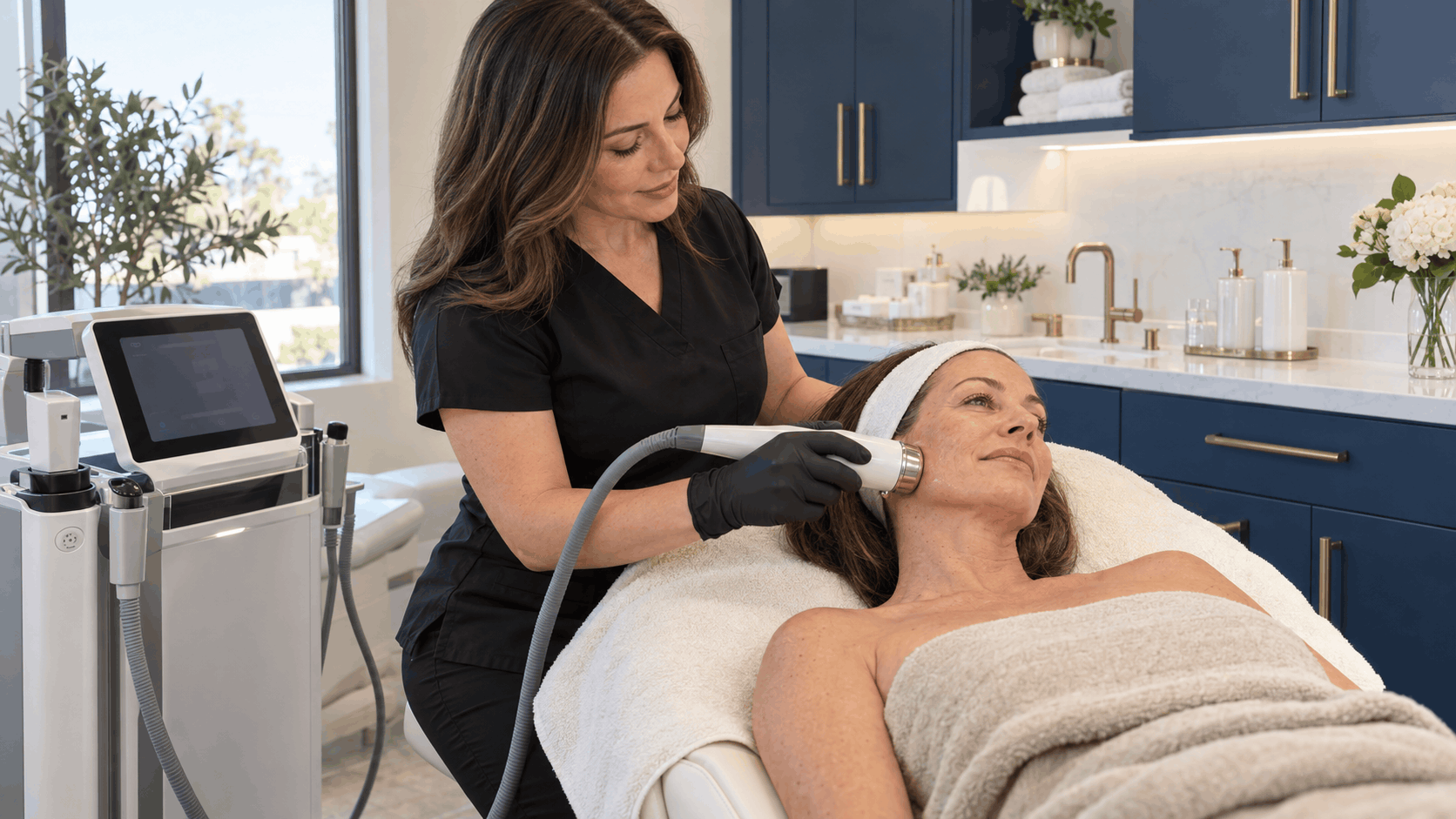
Forma is a non-invasive aesthetic treatment that uses radiofrequency energy to heat selected layers of the skin.
Radiofrequency, often abbreviated as RF, is a form of electromagnetic energy.
When delivered through an appropriate device, it generates controlled heating in targeted tissue.
The goal is to produce thermal effects that may support collagen remodeling and improve the appearance of mild skin laxity.
Forma is commonly considered for concerns such as:
- Mildly loose facial skin.
- Early jawline softness.
- Reduced skin firmness.
- Selected neck laxity.
- Fine textural changes associated with aging.
However, Forma doesn’t remove excess skin or physically reposition deeper facial structures.
It’s a skin-tightening treatment, not a surgical facelift in disguise.
The best candidates generally understand that improvement is expected to be subtle and gradual.
How Does Forma Work?
Forma uses radiofrequency energy to produce controlled heating in the skin.
The device is moved across the treatment area while the provider monitors the procedure according to the device’s safety and treatment protocols.
The heat can produce short-term changes in tissue appearance and may stimulate longer-term remodeling processes.
Collagen is one of the skin’s main structural proteins.
It contributes to firmness and support, but its organization and production change with age.
Radiofrequency treatments aim to encourage tissue responses that may improve skin firmness over time.
The process can be understood in three stages.
1. Controlled Heating
Radiofrequency energy raises the temperature of selected tissues.
The provider should use appropriate settings and follow device-specific temperature and safety guidance.
2. Immediate Tissue Response
Some patients notice temporary tightness or a smoother appearance shortly after treatment.
This isn’t necessarily evidence of lasting collagen improvement.
3. Gradual Remodeling
Over the following weeks, tissue remodeling may contribute to visible changes in skin firmness.
The extent of improvement varies considerably.
How Many Forma Skin Tightening Sessions Are Typically Needed?
Many Forma treatment plans involve six to eight sessions.
However, that number isn’t a universal medical requirement.
The recommended number of appointments depends on:
- Degree of skin laxity.
- Treatment area.
- Age and skin characteristics.
- Desired results.
- Individual response.
- Provider protocol.
Some patients may undergo a shorter series.
Others may need additional sessions or may be better suited to another procedure.
A provider should explain why a particular schedule is recommended rather than assuming everyone needs the same package.
Forma Skin Tightening Sessions: What to Expect Over Time
The following timeline illustrates how a typical multi-session treatment plan might progress.
| Treatment stage | What may happen | What to expect |
| Session 1 | Initial radiofrequency treatment | Temporary warmth, redness, or a smoother-looking appearance |
| Sessions 2–3 | Continued treatment | Early changes may be subtle or difficult to measure |
| Sessions 4–5 | Ongoing treatment series | Some patients begin noticing more consistent firmness |
| Sessions 6–8 | Completion of a commonly recommended series | Provider evaluates visible changes and treatment response |
| Following weeks | Tissue remodeling may continue | Additional improvement may develop in some patients |
| Maintenance phase | Follow-up assessment | Further sessions may be discussed if appropriate |
This is an illustrative schedule, not a guaranteed progression.
The number of Forma skin tightening sessions matters less than whether the treatment is producing meaningful improvement for your individual skin.
Can You See Results After One Forma Session?
Some patients report that their skin feels tighter or looks smoother after a single session.
However, early changes may be temporary.
Warmth, mild swelling, and short-term tissue responses can influence the immediate appearance.
That doesn’t mean the full treatment result has developed.
For collagen-related improvements, patience is usually necessary.
If you’re expecting a dramatic jawline transformation after one appointment, Forma may not match your expectations.
When Do Forma Results Become Noticeable?
Results vary, but some patients begin noticing subtle changes during a multi-session treatment series.
More gradual improvements may become apparent over the weeks following treatment.
The timeline depends on several factors.
Baseline Skin Laxity
Someone with mild laxity may notice a more visible change than someone with significant sagging.
Treatment Consistency
Following the recommended schedule may help the provider assess the response more consistently.
However, completing a series doesn’t guarantee improvement.
Skin Characteristics
Age, tissue thickness, collagen characteristics, and overall skin condition may influence results.
Individual Biological Response
Not everyone responds to radiofrequency treatment in the same way.
Some people experience visible firming.
Others may notice only minor changes.
How Often Should You Schedule Forma Sessions?
Forma skin tightening sessions are often scheduled approximately one week apart during an initial treatment series.
However, your provider may recommend a different interval.
Spacing depends on:
- Treatment settings.
- Area treated.
- Skin response.
- Recovery.
- Other aesthetic procedures.
- Device-specific protocols.
Scheduling sessions closer together doesn’t automatically improve results.
Your provider should explain the proposed frequency and allow time to monitor skin tolerance.
How Long Does Each Forma Session Take?
Forma appointment length depends on the size and number of treatment areas.
A smaller facial area may require less time than a combined face-and-neck treatment.
Your appointment may include:
- Skin assessment.
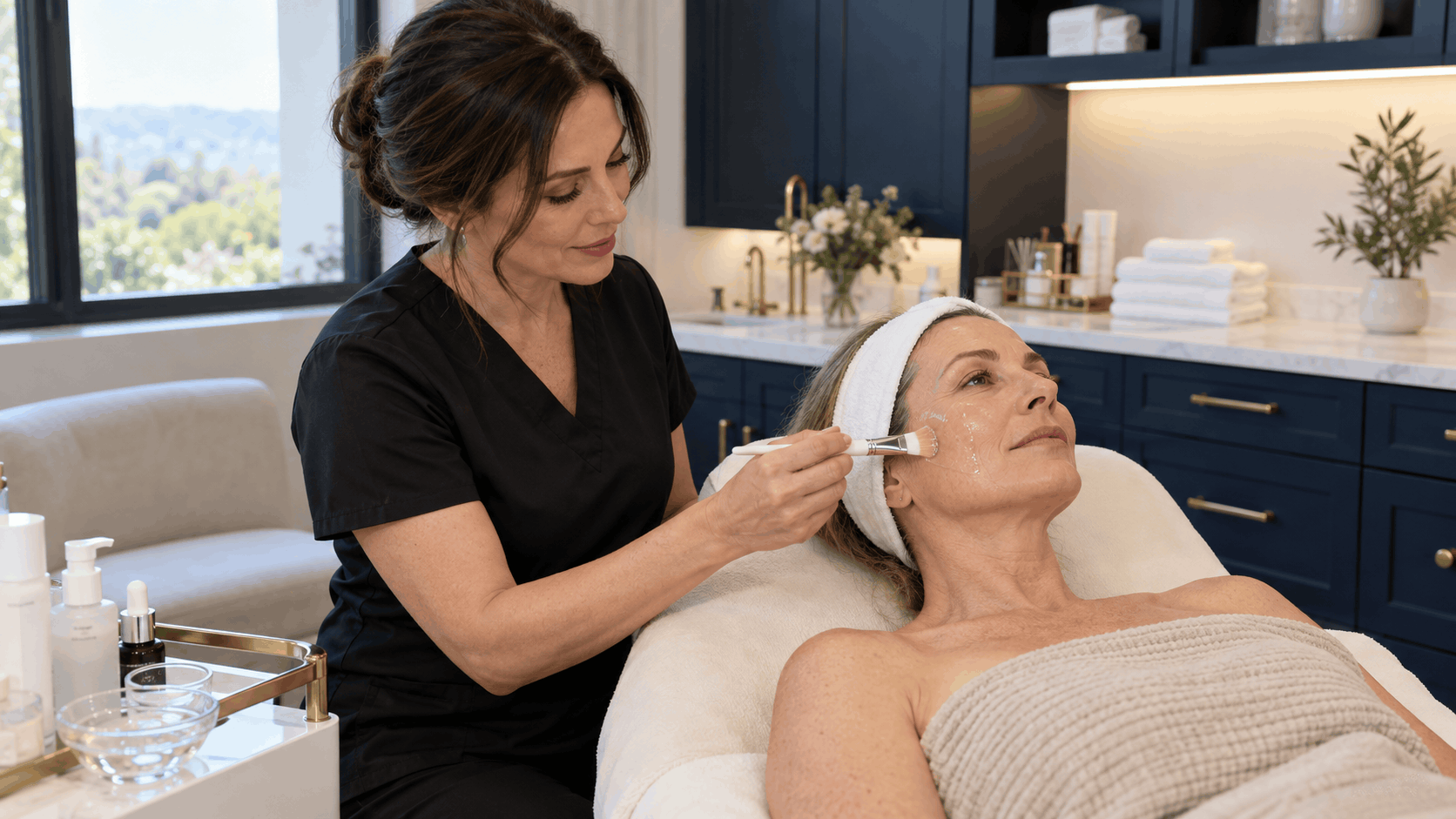
- Cleansing and preparation.
- Application of the appropriate treatment medium.
- Radiofrequency treatment.
- Post-treatment evaluation.
- Aftercare guidance.
The exact duration should be confirmed with your provider.
What Does Forma Feel Like?
Forma is often described as a warming treatment.
As the applicator moves across the skin, you may notice steady heat and gentle pressure.
Some patients compare the sensation to a warm facial massage.
However, comfort varies.
You might experience:
- Warmth.
- Mild pressure.
- Temporary redness.
- Increased sensitivity in certain areas.
The treatment should not cause severe pain or burning.
If the skin becomes excessively hot or uncomfortable, tell your provider immediately.
Proper technique and temperature monitoring are essential to reducing the risk of burns.
Is There Downtime After Forma?
Forma is generally considered a treatment with minimal downtime.
Many patients can return to routine activities shortly after an appointment.
Temporary effects may include:
- Redness.
- Warmth.
- Mild swelling.
- Tenderness.
- Skin sensitivity.
These effects often settle relatively quickly, but recovery varies.
More serious complications, including burns or unwanted tissue changes, are possible with inappropriate energy delivery.
Your provider should review relevant risks, contraindications, and aftercare instructions.
Who Is a Good Candidate for Forma?
Forma may be worth considering if you have mild skin laxity and want to explore a non-surgical treatment.
Potential candidates may include people who:
- Notice early jawline softness.
- Want subtle facial firming.
- Have mild cheek or neck laxity.
- Prefer minimal downtime.
- Can commit to multiple appointments.
- Understand that results are variable.
However, significant sagging or excess skin may require a different approach.
For more information about treatment suitability, read Does Forma Skin Tightening Really Work for Mild Skin Laxity?.
Can Forma Tighten a Sagging Jawline?
Forma may improve the appearance of mild laxity along the jawline in selected patients.
However, the jawline changes with age for several reasons.
These include:
- Skin laxity.
- Fat redistribution.
- Changes in facial bone structure.
- Reduced tissue support.
- Natural differences in anatomy.
Radiofrequency skin tightening addresses only part of this picture.
If jawline changes are primarily caused by significant tissue descent or excess skin, Forma may provide limited improvement.
A qualified provider should determine whether the concern is suitable for radiofrequency treatment.
Can Forma Help With Neck Skin Tightening?
Forma may be considered for certain mild neck skin concerns.
However, neck anatomy differs from facial anatomy.
The degree of skin laxity, tissue thickness, and treatment area all influence suitability.
Some people may notice subtle improvement in skin firmness.
Others may need a different approach, particularly if they have significant loose skin or prominent neck bands.
Your provider should evaluate the area and discuss realistic expectations.
Forma vs. Ultherapy: What’s the Difference?
Forma and Ultherapy are both non-surgical treatments associated with skin-tightening goals, but they use different energy technologies.
| Feature | Forma | Ultherapy |
| Technology | Radiofrequency | Focused ultrasound |
| Main mechanism | Controlled tissue heating | Focused thermal stimulation at selected depths |
| Typical treatment plan | Often a series of sessions | Frequently a single initial session, depending on the plan |
| Results | Gradual and generally subtle | Gradual and generally subtle |
| Downtime | Usually minimal | Usually minimal |
| Treatment sensation | Warming or massage-like | Pulses of heat, tingling, or discomfort |
| Ideal candidate | Selected mild laxity concerns | Selected lifting and tightening concerns |
| Surgical replacement? | No | No |
Neither is automatically better for everyone.
The most appropriate choice depends on the treatment area, degree of laxity, medical history, and desired outcome.
Forma vs. a Surgical Facelift
A surgical facelift physically repositions facial tissues and may remove excess skin.
Forma does neither.
That creates important differences.
Forma may be appropriate if you want:
- Subtle improvement.
- No surgical incisions.
- Minimal downtime.
- A gradual treatment approach.
Surgery may be more appropriate if you need:
- Significant tissue repositioning.
- Correction of substantial skin excess.
- More dramatic lifting.
- A longer-lasting structural change.
Both options have limitations and risks.
A consultation should focus on your goals rather than trying to make one treatment fit every concern.
For a broader overview, explore Non-Surgical Facelift Techniques That Restore Lift Without Downtime.
How Long Do Forma Results Last?
Forma results are not permanent.
Some patients may maintain visible improvement for several months or longer, but reliable longevity varies by individual and treatment protocol.
Factors that may influence results include:
- Natural aging.
- Baseline skin laxity.
- Individual tissue response.
- Sun exposure.
- Lifestyle factors.
- Treatment history.
Maintenance sessions may be recommended, but there isn’t one universally established schedule.
Your provider should assess the response before suggesting additional treatment.
Do You Need Maintenance Forma Sessions?
Some patients choose periodic maintenance appointments after completing an initial series.
However, maintenance isn’t automatically necessary for everyone.
The decision should depend on:
- Your initial results.
- How long improvement remains noticeable.
- Your current skin condition.
- Treatment goals.
- Provider recommendations.
Avoid assuming that more treatments will always produce greater tightening.
A responsible plan should balance potential benefits, cost, and risk.
Is Forma Safe for Every Skin Type?
Forma may be suitable for a range of skin tones because radiofrequency energy works differently from pigment-targeting light treatments.
However, that doesn’t mean the procedure is risk-free.
Skin sensitivity, underlying medical conditions, and treatment settings still matter.
Certain implanted electronic devices, active skin problems, or other medical conditions may make treatment inappropriate.
Your provider should review device-specific contraindications.
Tell them about:
- Implanted medical devices.
- Recent facial procedures.
- Active skin infections.
- Pregnancy or breastfeeding.
- Medical conditions affecting healing.
- Current medications.
- Previous adverse reactions to energy-based treatments.
A proper consultation is essential before starting a treatment series.
Can You Combine Forma With Other Facial Treatments?
Some patients explore Forma alongside other aesthetic procedures.
Depending on individual goals, these might include:
- Facials.
- Neuromodulators.
- Dermal fillers.
- Other skin-tightening technologies.
- Skin resurfacing treatments.
However, combining procedures isn’t always appropriate.
Treatments that involve heat, injections, or skin irritation may require specific spacing.
Your provider should consider cumulative effects and recovery time before recommending combinations.
Mirabile M.D. offers a variety of Facials & Lasers services that may address different aesthetic concerns.
How to Prepare for Your Forma Treatment Series
Preparation can help make your appointments more comfortable and consistent.
1. Discuss Your Goals
Explain which areas concern you most.
Are you hoping for a slightly firmer jawline, smoother-looking cheeks, or improvement in mild neck laxity?
Specific goals help your provider determine whether Forma is appropriate.
2. Review Your Medical History
Disclose implanted devices, recent procedures, medications, and relevant health conditions.
3. Ask About the Recommended Schedule
Find out how many Forma skin tightening sessions are proposed and why.
Ask when your provider expects to assess progress.
4. Discuss Possible Side Effects
Understand what temporary redness or swelling may look like.
Ask which symptoms should prompt medical follow-up.
5. Plan for Consistency
If your treatment plan involves weekly appointments, choose a schedule you can realistically maintain.
How to Track Your Forma Results
Because Forma improvements can be gradual, changes may be difficult to notice from day to day.
A simple progress-tracking approach can help.
Consider:
- Taking baseline photographs.
- Using similar lighting and angles.
- Avoiding beauty filters.
- Comparing images at consistent intervals.
- Recording any temporary side effects.
- Discussing progress during follow-up visits.
Photographs can be useful, but they aren’t a substitute for professional evaluation.
Lighting, facial expression, and camera position can make subtle changes appear larger or smaller than they are.
What If You Don’t See Results After Six Sessions?
If you’ve completed several Forma skin tightening sessions without noticeable improvement, discuss the response with your provider.
Possible explanations include:
- More significant skin laxity than the treatment can address.
- Individual differences in tissue response.
- Unrealistic expectations.
- An underlying concern that requires a different approach.
More sessions may not solve the problem.
Your provider should reassess the treatment plan rather than automatically recommending additional appointments.
For a broader perspective, read Get Youthful Skin With Skin Tightening Treatment.
Is Forma Worth It for Mild Skin Laxity?
Forma may be worth considering if you’re seeking subtle improvement without surgery and are comfortable with a series of treatments.
However, the decision should account for:
- Expected degree of improvement.
- Number of appointments.
- Total cost.
- Time commitment.
- Potential side effects.
- Alternative treatments.
For some patients, the convenience of a non-invasive approach is appealing.
For others, the modest and variable results may not justify a lengthy treatment series.
The best choice is one that matches your goals, anatomy, and expectations.
Key Takeaways
- Many plans involve six to eight Forma skin tightening sessions: However, treatment schedules should be individualized.
- Sessions are often spaced about a week apart: Your provider may recommend a different interval.
- Early improvements may be temporary: Meaningful changes generally develop gradually.
- Forma uses radiofrequency energy: Controlled heating may support collagen-related remodeling.
- Best results are generally subtle: Forma is most appropriate for selected mild laxity concerns.
- Downtime is usually minimal: Temporary redness, warmth, tenderness, or swelling may occur.
- Results aren’t permanent: Maintenance may be considered, but longevity varies.
- More sessions don’t guarantee better results: Progress should be evaluated before extending a treatment plan.
Wondering whether Forma is the right choice for your skin?
At Mirabile M.D., you can explore skin-tightening options and discuss whether a Forma treatment series matches your concerns.
A personalized consultation can help determine an appropriate schedule, realistic results, and whether another approach may be more suitable.
Because the goal isn’t to collect the most appointments—it’s to choose a treatment plan that makes sense for your skin.
FAQs
1. How many Forma skin tightening sessions do you need to see results?
Many treatment plans involve approximately six to eight Forma skin tightening sessions, although recommendations vary. Some patients notice temporary firmness after an early appointment, while more gradual changes may develop during the series. Your provider should recommend a schedule based on your skin condition and treatment response.
2. How often should Forma skin tightening sessions be scheduled?
Forma skin tightening sessions are often scheduled approximately one week apart during an initial series. The ideal interval depends on the treatment area, device protocol, and individual skin response. Your provider may adjust the schedule based on your needs.
3. Can you see results after one Forma treatment?
Some patients notice a temporarily smoother or firmer appearance after one Forma treatment. However, immediate changes don’t necessarily represent lasting collagen-related improvement. More meaningful results may require additional sessions and time for tissue remodeling.
4. How long do Forma skin tightening results last?
Forma results vary, and improvements are not permanent. Some patients may maintain visible changes for several months or longer, depending on their skin and treatment response. Maintenance sessions may be discussed after a professional assessment.
5. Is Forma better than a surgical facelift for sagging skin?
Forma may be appropriate for selected patients with mild skin laxity who want subtle improvement without surgery. A surgical facelift can provide more substantial tissue repositioning and correction of excess skin. The best option depends on the degree of sagging, treatment goals, and individual medical considerations.