That slight looseness around your jawline, cheeks, or neck might not warrant surgery—but it can still be noticeable enough to make you wonder whether a non-invasive treatment can actually make a difference.
That’s where Forma skin tightening comes in.
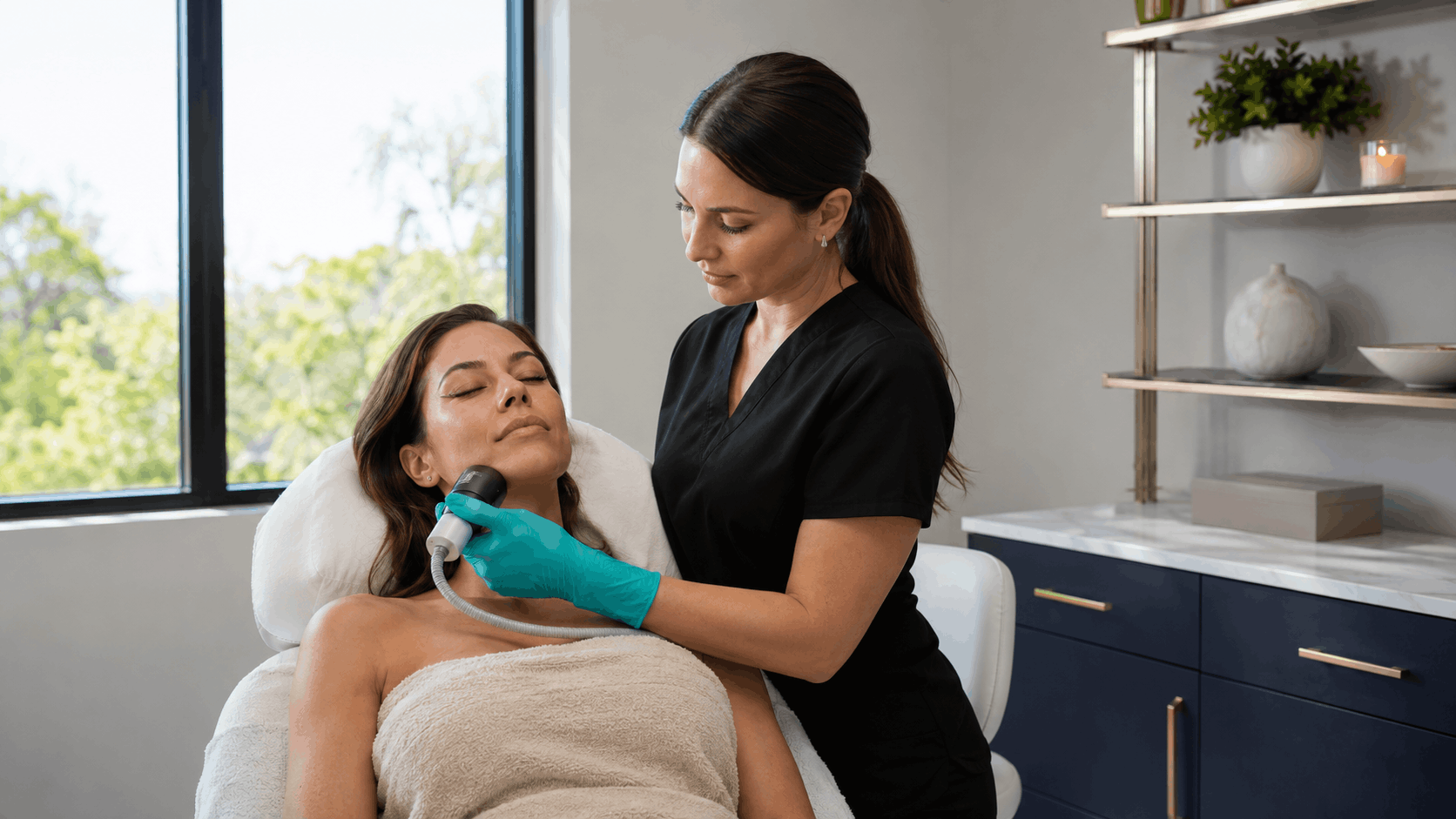
Forma is a non-invasive treatment that uses radiofrequency (RF) energy to gently heat the skin and encourage collagen production. Rather than removing or resurfacing skin, the treatment is designed to gradually improve firmness, elasticity, and overall skin quality.
So, does Forma actually work?
For people with mild skin laxity, Forma can be a useful option when the goal is subtle, progressive improvement without surgery or significant downtime. The key is understanding what the treatment can realistically accomplish—and when another skin-tightening technology might be a better fit.
Jump To:
- Detailed Breakdown
- How Does Forma Skin Tightening Work?
- Does Forma Actually Tighten Loose Skin?
- What Results Can You Expect From Forma?
- How Many Forma Treatments Are Usually Needed?
- Where Can Forma Skin Tightening Be Used?
- Forma vs. Other Skin Tightening Treatments
- Forma vs. Ultherapy
- Forma vs. Morpheus
- Forma vs. Secret RF
- Who Is a Good Candidate for Forma Skin Tightening?
- Is Forma Skin Tightening Worth It for Mild Laxity?
- Key Takeaways
- FAQs
TLDR – Quick Guide
Here’s what to know about Forma skin tightening at a glance:
- Best suited for: Mild to moderate signs of skin laxity and early aging.
- How it works: Radiofrequency energy heats tissue to encourage collagen remodeling and production.
- Downtime: Forma is described by Mirabile M.D. as requiring no downtime.
- Treatment time: Sessions typically take around 30–45 minutes.
- Typical treatment plan: Mirabile M.D. generally recommends 4–6 sessions approximately one week apart.
- Results: Expect gradual improvements in firmness and skin quality rather than surgical-level lifting.
- Other options: Depending on the degree of laxity and your goals, Ultherapy, Morpheus, or Secret RF may also be considered.
The simplest way to think about it? Forma skin tightening is designed for refinement, not dramatic transformation.
Detailed Breakdown
How Does Forma Skin Tightening Work?
Forma uses controlled radiofrequency energy to gently heat tissue beneath the skin. According to Mirabile M.D.’s Forma treatment information, the process is designed to encourage natural collagen production and improve skin firmness.
Collagen is one of the structural proteins responsible for helping skin maintain strength and support. With age, changes in collagen and other components of the skin contribute to reduced elasticity, wrinkles, and laxity.
Radiofrequency has become useful in cosmetic dermatology because thermal energy can be delivered into tissue without relying on the same light-based mechanisms used by laser treatments.
Research into non-invasive radiofrequency treatments supports their use for skin rejuvenation. Systematic reviews of RF technologies have reported measurable improvements in skin laxity, elasticity, and appearance, although outcomes vary between patients and technologies.
Does Forma Actually Tighten Loose Skin?
For the right candidate, yes—but the word “tighten” needs some context.
Research examining monopolar and bipolar radiofrequency treatments has found clinical evidence of improvements in skin laxity. Studies of RF facial and neck rejuvenation have also reported improvements in elasticity, collagen, and overall skin appearance.
However, those findings do not mean Forma will produce the same result for every patient.
Forma skin tightening makes the most sense when the concern involves early or mild laxity rather than substantial amounts of loose skin.
Someone beginning to notice softness around the jawline, for example, has very different treatment needs from someone experiencing advanced sagging.
Mirabile M.D. identifies Forma as an option for early to moderate signs of aging, including sagging and loss of elasticity. Patients with broader concerns can also explore available treatments for sagging skin and skin tightening.
What Results Can You Expect From Forma?
The realistic expectation is gradual, natural-looking improvement.
Forma isn’t designed to recreate the effects of a surgical facelift. Instead, treatment focuses on stimulating collagen and improving the appearance of firmness, texture, and skin quality over time.
Mirabile M.D. notes that patients may begin noticing subtle tightening and changes in texture within the first few weeks, with additional improvements developing throughout the treatment series.
That gradual progression can make Forma skin tightening attractive to people who want to look refreshed without making an abrupt change in their appearance.
Results can vary according to:
- The starting degree of skin laxity
- Age and overall skin quality
- Treatment area
- Number of sessions completed
- Individual response to treatment
- Lifestyle and natural aging
Maintenance treatments may also be recommended because no non-surgical skin-tightening procedure can stop the natural aging process.
How Many Forma Treatments Are Usually Needed?
Forma generally works as a treatment series rather than a one-time procedure.
Mirabile M.D. typically recommends 4–6 Forma treatments spaced approximately one week apart, although the exact treatment plan depends on the patient’s skin and individual goals.
Sessions generally take around 30–45 minutes, depending on the treatment area.
Patients typically experience warmth while the device moves across the skin. Mirabile M.D. compares the sensation to a warm massage and notes that normal daily activities can generally be resumed immediately afterward.
That combination of short appointments and little disruption can make Forma appealing to patients who don’t want to arrange their schedules around significant recovery periods.
Where Can Forma Skin Tightening Be Used?
Forma may be used on several areas where mild skin laxity or reduced firmness becomes noticeable.
According to Mirabile M.D., treatment areas can include the:
- Face
- Neck
- Jawline
- Abdomen
- Arms
For facial aging in particular, Forma may be appropriate when the primary concern is early laxity rather than dramatic sagging or major changes in facial structure.
Forma is also part of Mirabile M.D.’s broader range of facial and laser services. Having multiple technologies available allows treatment recommendations to focus on the actual concern rather than trying to make one procedure work for everyone.
Forma vs. Other Skin Tightening Treatments
Forma skin tightening isn’t automatically the best choice just because loose skin is present.
Different technologies use different forms of energy and can target tissue in different ways. The most appropriate treatment depends on the degree of laxity, treatment area, desired result, and tolerance for downtime.
Forma vs. Ultherapy
Ultherapy uses focused ultrasound energy rather than radiofrequency.
Because the technologies work differently, choosing between Forma and Ultherapy should be based on the patient’s concerns, degree of laxity, treatment area, and desired outcome rather than simply deciding which technology is “better.”
Forma vs. Morpheus
Morpheus combines microneedling with radiofrequency energy.
That combination means it takes a different approach from non-invasive Forma and may enter the conversation when a patient wants to address multiple aspects of skin quality alongside laxity.
Forma vs. Secret RF
Secret RF is another radiofrequency microneedling option available at Mirabile M.D.
Because RF energy is delivered alongside microneedling, its treatment approach and experience differ from Forma.
Ultimately, there isn’t a universal winner among these treatments.
A better question is: Which technology best matches your skin, level of laxity, desired improvement, and tolerance for downtime?
Who Is a Good Candidate for Forma Skin Tightening?
Forma may be worth discussing if you:
- Have mild or early skin laxity
- Notice reduced firmness or elasticity
- Want subtle rather than dramatic changes
- Prefer a non-invasive procedure
- Want little to no downtime
- Are willing to complete a treatment series
- Have realistic expectations about non-surgical skin tightening
Mirabile M.D. states that Forma is suitable for all skin types and can address early to moderate signs of aging.
A professional consultation remains important because what appears to be “loose skin” can involve several different factors, including skin quality, facial volume, underlying structure, and the actual degree of laxity.
Is Forma Skin Tightening Worth It for Mild Laxity?
For someone with mild skin laxity who wants gradual improvement without surgery, Forma has a compelling use case.
Research into radiofrequency rejuvenation supports the ability of RF technologies to improve laxity and elasticity. However, evidence supporting radiofrequency treatments as a broader category should not be interpreted as a guarantee that every patient receiving Forma will experience the same outcome.
That distinction matters.
If your goal is, “I want my skin to look a little firmer, smoother, and refreshed,” Forma skin tightening may align well with your expectations.
If you’re looking for substantial lifting of significant loose skin, another non-surgical technology—or potentially a surgical consultation—may be more appropriate.lized care helps ensure your treatment plan aligns with your overall health objectives.
Key Takeaways
- Forma skin tightening can be an effective option for mild skin laxity when the goal is gradual, natural-looking improvement rather than dramatic lifting.
- Forma uses radiofrequency energy to heat tissue and encourage collagen production.
- The treatment is best suited to people experiencing early to moderate signs of aging, such as reduced firmness and mild sagging.
- Mirabile M.D. generally recommends 4–6 treatments spaced approximately one week apart.
- Sessions typically take around 30–45 minutes, with no required downtime according to Mirabile M.D.
- Forma can be used on areas including the face, neck, jawline, abdomen, and arms.
- Forma isn’t the only option. Ultherapy, Morpheus, and Secret RF use different technologies that may be more appropriate for certain concerns.
- Results depend on your starting skin condition, treatment plan, biological response, and expectations.
- A professional evaluation is the best way to determine whether Forma or another skin-tightening treatment matches your goals.
- If you’re considering Forma skin tightening in Overland Park, Mirabile M.D. can evaluate your concerns and recommend an appropriate treatment approach.
FAQs
1. Does Forma skin tightening really work?
Forma skin tightening uses radiofrequency energy to encourage collagen production and improve skin firmness. Research on non-invasive RF treatments supports improvements in skin laxity and elasticity, particularly when the concern is mild and expectations are realistic. Individual results depend on factors including skin condition, treatment plan, and response to treatment.
2. How many Forma treatments do you need?
Mirabile M.D. generally recommends 4–6 Forma treatments spaced approximately one week apart. The exact number of sessions may vary depending on the treatment area, degree of laxity, and desired result. A consultation can help establish a treatment schedule based on your individual needs.
3. Is Forma good for a sagging jawline?
Forma can be used on the jawline and may be appropriate when sagging or laxity is relatively mild. More pronounced sagging may require a different approach depending on its severity and underlying cause. An evaluation can help determine whether Forma or another tightening technology is more appropriate.
4. Is there downtime after Forma skin tightening?
Mirabile M.D. describes Forma as a non-invasive treatment with no required downtime. Some patients may experience temporary warmth or mild redness following treatment. Normal daily activities can generally be resumed immediately.
5. How long do Forma skin tightening results last?
Forma results can remain noticeable after completing a treatment series, but they aren’t permanent because natural aging continues. Maintenance sessions may be recommended to help preserve improvements in firmness and elasticity. The longevity of results varies according to individual skin characteristics, lifestyle, age, and treatment plan.