A well-defined jawline is often associated with youth, confidence, and facial balance. However, aging, genetics, weight fluctuations, and collagen loss can all contribute to a softer jawline over time.
Many people assume that achieving a more sculpted lower face requires surgery, but modern aesthetic treatments have dramatically expanded the possibilities for jawline contouring without surgery. Today, patients can enhance definition, improve skin firmness, and create a more refined facial profile with minimally invasive treatments that require little to no downtime.
The challenge is determining which option is best for your unique anatomy and goals. Depending on whether you’re concerned about volume loss, skin laxity, or overall facial structure, different treatments may offer different advantages.
Jump To:
TLDR – Quick Guide
- Jawline contouring without surgery can improve facial definition without incisions or lengthy recovery.
- Dermal fillers can enhance jawline structure and contour immediately.
- Ultherapy uses ultrasound technology to tighten and lift skin over time.
- Morpheus combines microneedling and radiofrequency to improve skin firmness and collagen production.
- Radiesse and Voluma can provide structural support and facial contouring.
- The best treatment depends on the cause of jawline concerns and your desired outcome.
Detailed Breakdown
Why Jawline Definition Changes Over Time
Several factors contribute to changes in jawline appearance.
These include:
- Natural aging
- Collagen loss
- Skin laxity
- Volume depletion
- Genetics
- Weight fluctuations
As collagen production declines, the skin loses elasticity and support. Fat redistribution and bone structure changes can also contribute to reduced jawline definition.
Because multiple factors are often involved, successful jawline contouring without surgery typically requires a personalized approach.
What Is Jawline Contouring Without Surgery?
Non-surgical jawline contouring refers to treatments that enhance the appearance of the jawline without requiring invasive surgery.
These treatments can help:
- Improve facial definition
- Create a sharper profile
- Reduce the appearance of jowls
- Enhance facial symmetry
- Support collagen production
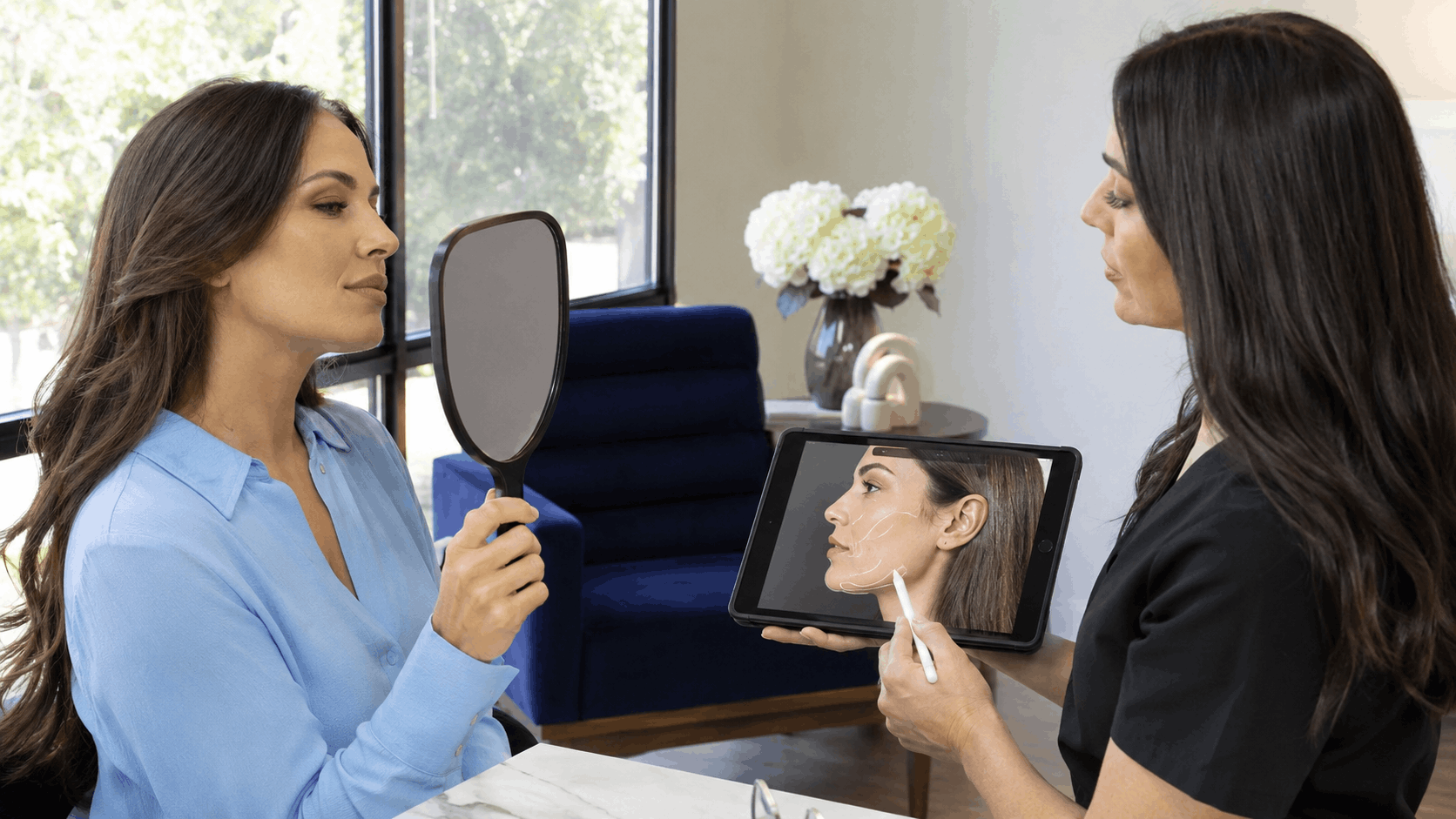
Patients exploring jawline contouring treatments often discover that several different technologies can be used individually or in combination to achieve their desired results.
Dermal Fillers for Jawline Enhancement
Dermal fillers remain one of the most popular options for jawline contouring.
By strategically placing filler along the jawline and chin, providers can create stronger facial angles and improved definition.
Benefits include:
- Immediate results
- Minimal downtime
- Customizable contouring
- Enhanced facial balance
Fillers are especially useful when volume loss contributes to a less-defined jawline.
Radiesse for Jawline Contouring
Radiesse is a collagen-stimulating injectable that provides both immediate structure and long-term collagen production.
Many providers use Radiesse to:
- Strengthen jawline contours
- Improve lower-face definition
- Support facial structure
- Enhance skin quality over time
Because it stimulates collagen while providing immediate volume, Radiesse is often an excellent option for patients seeking longer-lasting improvement.
Voluma for Facial Structure and Definition
Voluma is a hyaluronic acid filler designed to restore volume and support facial contours.
While commonly used in the cheeks, Voluma can also contribute to jawline enhancement by improving overall facial balance and structural support.
Benefits may include:
- Lifted appearance
- Improved facial proportions
- Enhanced contour definition
- Immediate visible results
For some patients, restoring mid-face volume can indirectly improve jawline appearance by creating better facial harmony.
Ultherapy for Skin Tightening
Not all jawline concerns are related to volume loss.
For patients experiencing mild to moderate skin laxity, Ultherapy may be a highly effective option.
Ultherapy uses focused ultrasound energy to stimulate collagen production deep beneath the skin’s surface.
Benefits include:
- Non-invasive treatment
- Gradual lifting effects
- Improved skin firmness
- No surgical incisions
Results develop gradually over several months as collagen production increases.
Ultherapy is often recommended for patients seeking skin tightening rather than volume enhancement.
Morpheus for Jawline Rejuvenation
Morpheus combines microneedling and radiofrequency energy to remodel tissue and stimulate collagen production.
This treatment can improve:
- Skin laxity
- Fine lines
- Texture concerns
- Facial contour definition
Because Morpheus targets deeper layers of tissue, it can be particularly beneficial for patients seeking skin tightening and improved jawline firmness.
Many providers use Morpheus as part of a comprehensive facial rejuvenation strategy.
Which Treatment Is Best for Jawline Contouring Without Surgery?
The answer depends on what’s causing the loss of definition.
If Volume Loss Is the Primary Concern
Injectable fillers such as Radiesse and Voluma may provide the most noticeable improvement.
These treatments restore structural support and create immediate contour enhancement.
If Skin Laxity Is the Main Issue
Ultherapy or Morpheus may be more appropriate.
These treatments stimulate collagen production and tighten underlying tissue without adding volume.
If Multiple Factors Are Involved
Many patients benefit from combination treatment plans.
For example:
- Fillers for structure
- Ultherapy for lifting
- Morpheus for skin tightening
Combining technologies often produces more comprehensive and natural-looking results.
How Long Do Results Last?
Longevity varies by treatment.
Fillers
Results may last from several months to over a year depending on the product used and individual metabolism.
Ultherapy
Collagen production can continue for several months, with results often lasting one year or longer.
Morpheus
Many patients enjoy improvements that continue developing for several months after treatment.
Maintenance treatments may help extend results.
Who Is a Good Candidate?
You may be a good candidate for jawline contouring without surgery if you:
- Want a more defined jawline
- Prefer non-surgical solutions
- Have mild to moderate skin laxity
- Have experienced age-related volume loss
- Want minimal downtime
A professional consultation can help identify the most effective treatment strategy based on your facial anatomy and goals.
Patients exploring treatment options can review available fillers and other injectables alongside energy-based skin tightening procedures to determine the best path forward.
Key Takeaways
- Jawline contouring without surgery offers multiple options for improving facial definition.
- Radiesse and Voluma can restore volume and enhance structural support.
- Ultherapy stimulates collagen production to tighten and lift skin over time.
- Morpheus combines radiofrequency and microneedling to improve firmness and contour.
- The best treatment depends on whether volume loss, skin laxity, or both are contributing to your concerns.
- Many patients achieve the most natural-looking results through customized combination treatment plans.
- A professional assessment can help determine which approach best aligns with your goals.
FAQs
1. What is the best treatment for jawline contouring without surgery?
The best treatment depends on the cause of your jawline concerns. Fillers such as Radiesse and Voluma can restore structure and definition, while Ultherapy and Morpheus focus on skin tightening. Many patients achieve optimal results through a customized combination approach.
2. How long do non-surgical jawline contouring results last?
Results vary depending on the treatment selected. Fillers may last from several months to over a year, while collagen-stimulating treatments often provide longer-term improvements. Maintenance treatments can help preserve results.
3. Does jawline contouring without surgery hurt?
Most treatments involve minimal discomfort and are well tolerated. Many providers use topical numbing agents or other comfort measures during treatment. Recovery is typically much easier than surgical alternatives.
4. Can Ultherapy improve jawline definition?
Yes. Ultherapy stimulates collagen production beneath the skin and can help lift and tighten areas along the jawline. Results develop gradually as new collagen forms over several months.
5. Can fillers and skin tightening treatments be combined?
Absolutely. Many providers combine fillers with treatments such as Ultherapy or Morpheus to address both volume loss and skin laxity. This comprehensive approach often produces more balanced and natural-looking results.