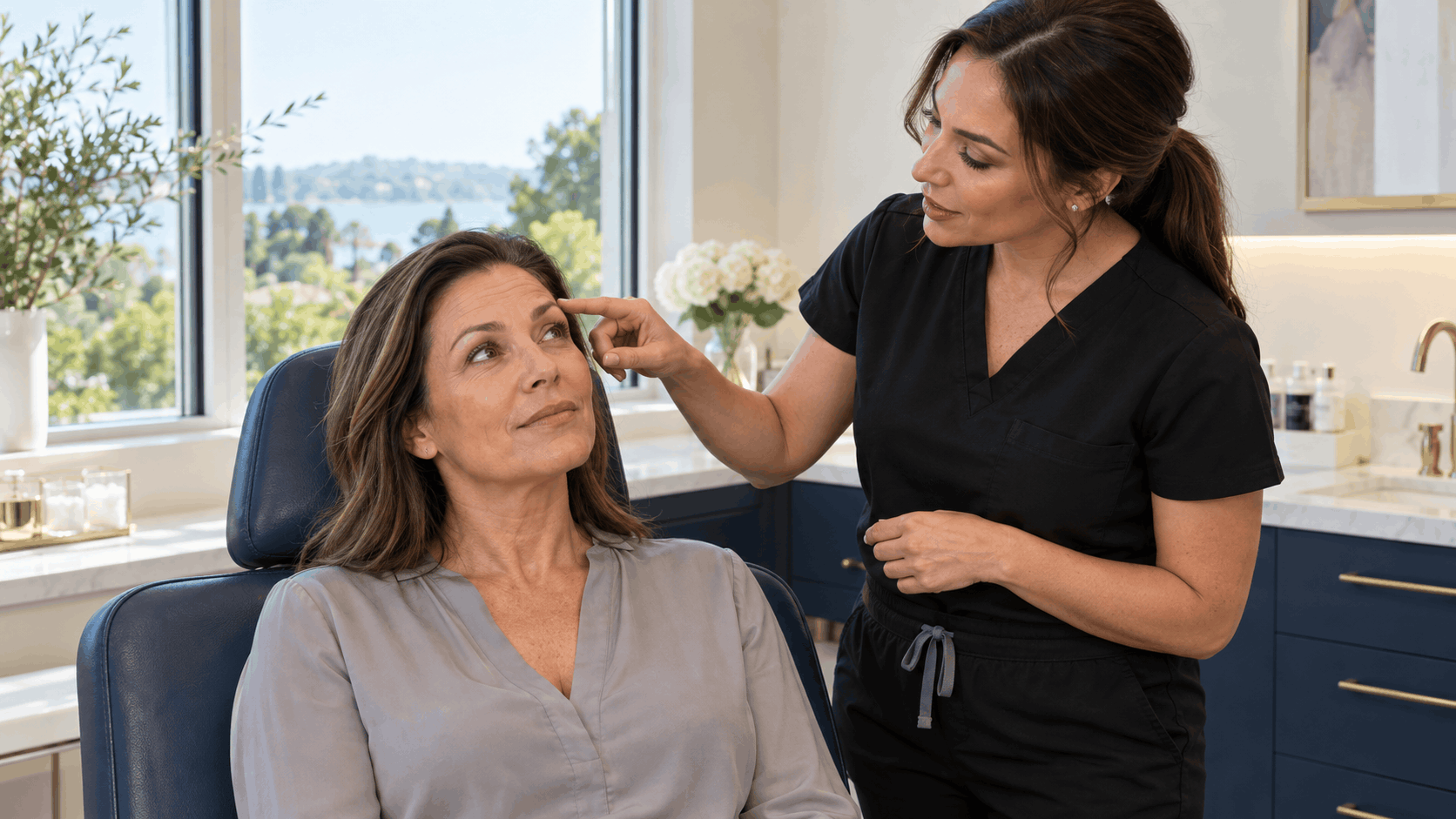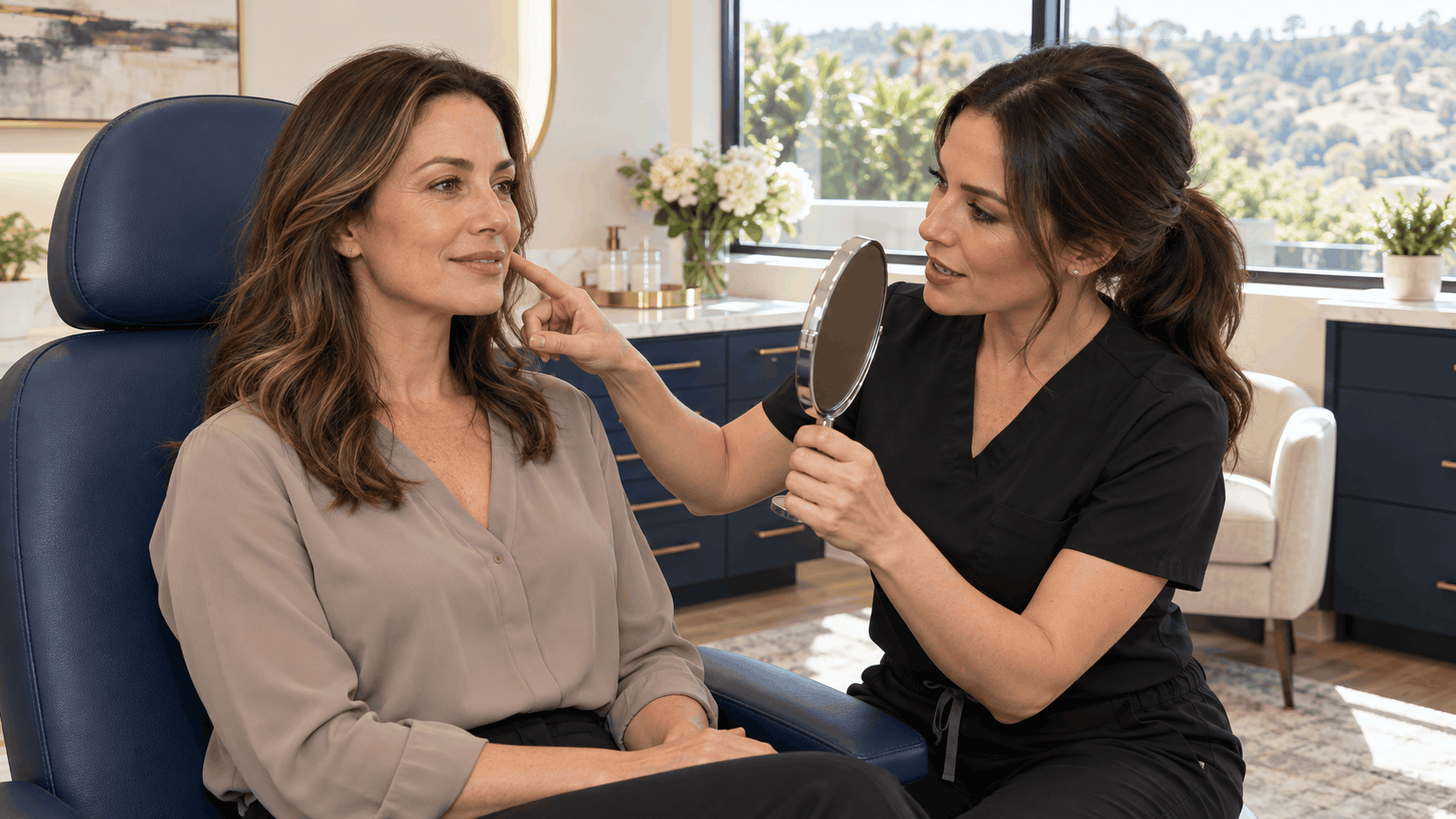
Have you noticed your eyebrows sitting a little lower than they used to? Maybe your upper eyelids look heavier, your eyes appear more tired, or your favorite eyebrow pencil is suddenly doing more lifting than you’d like.
Changes around the brow area are a natural part of aging. As skin loses elasticity and underlying tissues change, the eyebrows may gradually descend, affecting the appearance of the upper face.
But what if you’re not ready for surgery?
An Ultherapy eyebrow lift offers a non-surgical option for people interested in lifting the brow area without incisions or a lengthy recovery.
Using focused ultrasound energy, Ultherapy stimulates a tissue response that encourages new collagen production. Over time, this process may create a subtle lifting effect in appropriately selected patients.
The important word here is subtle.
An Ultherapy eyebrow lift isn’t designed to recreate the dramatic results of surgical brow lifting. Instead, it aims to provide a modest, natural-looking improvement through gradual collagen remodeling.
So, how does the treatment work, when will you notice changes, and how long can those results last?
Let’s break it down.
Jump To:
- Detailed Breakdown
- What Is an Ultherapy Eyebrow Lift?
- How Does Ultherapy Lift the Eyebrows?
- Who Is a Good Candidate for an Ultherapy Eyebrow Lift?
- What Does an Ultherapy Eyebrow Lift Feel Like?
- How Long Does an Ultherapy Brow Treatment Take?
- When Will You See Results From an Ultherapy Eyebrow Lift?
- How Long Do Ultherapy Eyebrow Lift Results Last?
- How Much Can Ultherapy Actually Lift the Eyebrows?
- Ultherapy Eyebrow Lift vs. Surgical Brow Lift
- Is There Downtime After an Ultherapy Eyebrow Lift?
- Can Ultherapy Help With Hooded Eyelids?
- Ultherapy vs. Botox Brow Lift: What's the Difference?
- Can Ultherapy Treat Other Areas of Sagging Skin?
- How Many Ultherapy Eyebrow Lift Sessions Will You Need?
- How to Prepare for an Ultherapy Eyebrow Lift
- How to Support Your Results After Treatment
- Is an Ultherapy Eyebrow Lift Worth It?
- Key Takeaways
- FAQs
TL;DR – Quick Guide
- What it is: An Ultherapy eyebrow lift is a non-invasive treatment that uses focused ultrasound energy to produce a lifting effect in the brow area.
- How it works: Ultrasound energy creates controlled thermal effects beneath the skin, triggering collagen remodeling.
- Best for: Appropriate candidates with mild to moderate brow descent who want subtle improvement without surgery.
- Treatment time: Brow-area appointments may be relatively brief, although exact timing depends on the treatment plan.
- When results appear: Improvements typically develop gradually over approximately two to three months, with continued changes possible afterward.
- How long results last: Results may remain noticeable for around a year or longer in some patients, but longevity varies.
- Downtime: Most patients can resume routine activities shortly after treatment.
- Potential side effects: Temporary redness, swelling, tenderness, tingling, or other adverse effects may occur.
- Important limitation: Ultherapy doesn’t remove excess eyelid skin or provide the same degree of repositioning as surgery.
Detailed Breakdown
What Is an Ultherapy Eyebrow Lift?
An Ultherapy eyebrow lift is a non-surgical treatment that uses focused ultrasound energy to create a lifting effect in the brow area.
Ultherapy is a medical aesthetic technology used for certain non-invasive lifting and skin-tightening applications.
Unlike surgical brow lifting, the procedure doesn’t involve incisions or physically repositioning tissues.
Instead, ultrasound energy is delivered to selected tissue depths beneath the skin.
This creates small, controlled areas of thermal stimulation that initiate the body’s natural repair response.
Over time, collagen remodeling may improve tissue firmness and produce a modest brow lift.
The treatment is generally intended for people who want a subtle change rather than a dramatic transformation.
How Does Ultherapy Lift the Eyebrows?
To understand how an Ultherapy eyebrow lift works, it helps to understand collagen.
Collagen is a structural protein that contributes to the skin’s strength and firmness.
As we age, collagen production and organization change.
Combined with changes in fat, bone, and connective tissue, this can contribute to sagging around the eyebrows.
Ultherapy addresses part of this process through focused ultrasound energy.
Step 1: Ultrasound Energy Reaches Targeted Tissue
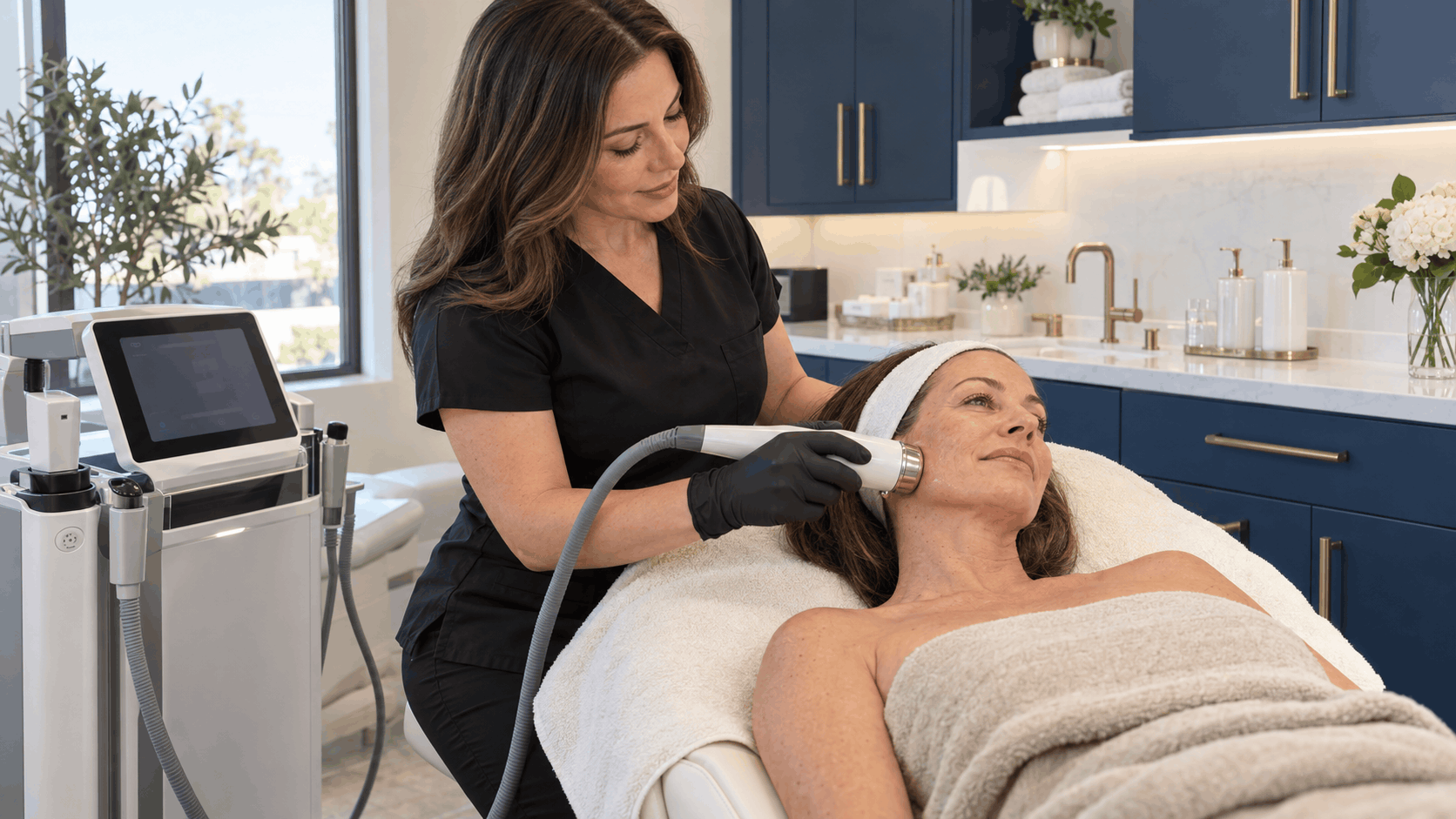
Ultherapy delivers focused ultrasound energy beneath the skin’s surface.
The treatment is designed to create thermal coagulation points at selected depths while limiting effects on the intervening tissue.
Ultherapy systems also use ultrasound imaging to help trained providers visualize relevant tissue layers during treatment.
Step 2: Controlled Thermal Stimulation Occurs
The focused energy produces localized heating within the targeted tissue.
This triggers a biological response associated with tissue repair and collagen remodeling.
The process doesn’t physically pull the eyebrow upward during the appointment.
Instead, it encourages gradual changes in the treated tissues.
Step 3: Collagen Remodeling Develops
Over the following weeks and months, collagen remodeling may improve tissue firmness.
For suitable candidates, this can create a subtle elevation of the brow.
The lift develops gradually because the treatment relies on a biological response, not an immediate mechanical adjustment.
Who Is a Good Candidate for an Ultherapy Eyebrow Lift?
An Ultherapy eyebrow lift may be worth considering if you have early or moderate changes in brow position and prefer a non-surgical approach.
Potential candidates may include people who:
- Notice mild eyebrow descent.
- Feel their upper face looks slightly tired.
- Want a subtle, natural-looking lift.
- Prefer to avoid surgical incisions.
- Can accept gradual rather than immediate results.
- Have realistic expectations about the amount of improvement.
However, Ultherapy isn’t appropriate for everyone.
Someone with significant brow descent or substantial excess upper eyelid skin may need a different treatment approach.
Likewise, not all heaviness around the eyes comes from the eyebrows.
In some cases, the main concern is excess eyelid skin, changes in orbital fat, or another anatomical issue.
A qualified provider should assess the underlying cause before recommending treatment.
For more information about related concerns, explore Sagging Skin & Skin Tightening.
What Does an Ultherapy Eyebrow Lift Feel Like?
During an Ultherapy eyebrow lift, patients may feel brief sensations of heat, tingling, or discomfort as ultrasound energy is delivered.
The sensation can vary depending on:
- Treatment location.
- Energy settings.
- Individual sensitivity.
- Tissue characteristics.
- Comfort measures used.
Some patients describe the experience as short bursts of warmth or prickling beneath the skin.
Others find certain areas more uncomfortable.
Your provider should explain what sensations are expected and discuss appropriate comfort measures before treatment begins.
Discomfort generally occurs during energy delivery rather than throughout the entire appointment.
However, the experience varies, and some patients may find the procedure painful.
Tell your provider if you experience unexpected or severe pain.
How Long Does an Ultherapy Brow Treatment Take?
One advantage of an Ultherapy eyebrow lift is that the treatment area is relatively small.
A brow-focused session may take less time than a full-face or neck treatment.
However, exact appointment length depends on:
- The treatment area.
- The number of ultrasound lines delivered.
- The provider’s treatment plan.
- Preparation and assessment.
- Comfort measures.
If you’re curious about shorter brow-focused appointments, read Ultherapy 30-Minute Brow Makeover.
Keep in mind that a short appointment doesn’t mean every patient will achieve the same result.
Treatment settings and patient selection matter more than speed.
When Will You See Results From an Ultherapy Eyebrow Lift?
One of the most common questions is whether the eyebrows will look lifted immediately.
Some patients may notice temporary changes shortly after treatment, but the main improvement is generally expected to develop gradually.
That’s because collagen remodeling takes time.
A typical progression may look like this:
| Time after treatment | What you may notice |
| Immediately | Temporary redness, swelling, or sensitivity; meaningful lifting may not yet be visible |
| First few weeks | Early tissue changes may begin, although visible improvement can be limited |
| Around 2–3 months | Gradual lifting and firming may become more noticeable |
| Around 3–6 months | Some patients may experience continued collagen-related changes |
| Beyond 6 months | Results may remain visible, although natural aging continues |
These are general expectations, not a guaranteed timeline.
Some patients see noticeable improvement, while others experience only a small change.
An Ultherapy eyebrow lift rewards patience—but it shouldn’t come with a promise of dramatic results.
How Long Do Ultherapy Eyebrow Lift Results Last?
Results from an Ultherapy eyebrow lift may remain noticeable for approximately 12 months or longer in some patients.
However, there is no universal expiration date.
The longevity of results depends on several factors.
Age and Skin Condition
Skin elasticity, collagen characteristics, and the degree of existing laxity may influence the response.
Individual Collagen Remodeling
Not everyone produces the same visible improvement after ultrasound treatment.
Natural Aging
Ultherapy doesn’t stop the aging process.
Changes in skin, fat, muscle, and connective tissue continue after treatment.
Sun Exposure and Lifestyle
Ultraviolet exposure contributes to skin aging.
Consistent sun protection and healthy skincare habits can support overall skin health, although they don’t guarantee a longer-lasting brow lift.
Treatment Response
Some patients may maintain visible improvement longer than others.
A provider can assess whether additional treatment may be appropriate based on the original response and current skin condition.
How Much Can Ultherapy Actually Lift the Eyebrows?
This is where realistic expectations are especially important.
Ultherapy can produce a measurable brow-lifting effect in some patients, but the degree of lift is generally modest.
In clinical evaluations of ultrasound-based brow lifting, average changes have been measured in millimeters rather than dramatic shifts in eyebrow position.
The amount of improvement varies by patient, and an individual result cannot be predicted from an average.
Ultherapy may help the brow area look slightly more elevated or refreshed.
However, it cannot reliably:
- Produce the same lift as surgery.
- Remove substantial excess upper eyelid skin.
- Correct every form of eyelid heaviness.
- Permanently stop brow descent.
- Guarantee symmetrical improvement.
If your goal is a dramatic eyebrow repositioning, a surgical consultation may be more appropriate.
Ultherapy Eyebrow Lift vs. Surgical Brow Lift
Both treatments address brow position, but they differ significantly in technique, recovery, and expected results.
| Feature | Ultherapy eyebrow lift | Surgical brow lift |
| Procedure type | Non-invasive | Surgical |
| How it works | Focused ultrasound stimulates tissue remodeling | Physically repositions brow tissues |
| Incisions | None | Required |
| Degree of lift | Generally subtle | Can provide more substantial repositioning |
| Results | Develop gradually | More immediate repositioning, with swelling affecting early appearance |
| Downtime | Usually minimal | Recovery period required |
| Longevity | Variable; often around a year or longer | Typically longer-lasting, although aging continues |
| Best suited for | Selected mild to moderate concerns | More significant brow descent or structural concerns |
Neither option is automatically better.
The right choice depends on your anatomy, expectations, medical history, and willingness to undergo recovery.
Is There Downtime After an Ultherapy Eyebrow Lift?
Most patients can return to routine daily activities shortly after treatment.
Because Ultherapy doesn’t involve incisions or removal of the skin’s surface, it generally requires less recovery time than surgery.
However, temporary side effects are possible.
These may include:
- Redness.
- Mild swelling.
- Tenderness.
- Tingling.
- Temporary numbness or altered sensation.
- Bruising.
- Muscle soreness or discomfort.
Less common complications can occur, including nerve-related symptoms, burns, or unwanted changes in facial tissues.
Your provider should review the relevant risks and device-specific contraindications before treatment.
If you experience persistent numbness, facial weakness, severe pain, or unusual symptoms, seek prompt medical evaluation.
Can Ultherapy Help With Hooded Eyelids?
Sometimes, but it depends on what’s causing the hooded appearance.
If mild brow descent contributes to upper eyelid heaviness, a modest brow lift may improve the appearance of the area.
However, hooded eyelids can also result from:
- Excess upper eyelid skin.
- Natural eyelid anatomy.
- Changes in orbital fat.
- Eyelid muscle or tendon problems.
- Brow position.
Ultherapy doesn’t remove excess eyelid skin.
It also doesn’t treat medical conditions that cause true eyelid drooping.
If your upper eyelids interfere with vision or have changed suddenly, seek appropriate medical evaluation.
Ultherapy vs. Botox Brow Lift: What’s the Difference?
Some patients compare an Ultherapy eyebrow lift with a Botox brow lift.
Although both are non-surgical approaches, they work differently.
An Ultherapy eyebrow lift uses focused ultrasound to stimulate tissue remodeling.
A Botox brow lift uses botulinum toxin injections to relax selected muscles that pull the eyebrows downward.
This may allow opposing muscles to create a modest lifting effect.
Key differences include:
- Ultherapy: Targets selected tissue layers and produces gradual collagen-related changes.
- Botox: Changes muscle activity and typically produces effects within days to weeks.
- Longevity: Botulinum toxin effects are temporary, commonly lasting several months.
- Treatment selection: Anatomy and muscle activity influence whether a neuromodulator brow lift is appropriate.
Botulinum toxin brow lifting is generally an off-label cosmetic technique, and results vary.
Some patients may be candidates for one approach, both, or neither.
Can Ultherapy Treat Other Areas of Sagging Skin?
Ultherapy is used for selected non-invasive lifting and skin-tightening applications beyond the brow area.
Depending on the device’s authorized indications and individual patient suitability, treatment may be considered for certain areas of the face, neck, or upper chest.
For example, patients may explore ultrasound-based treatment for:
- Mild skin laxity.
- Changes in lower-face definition.
- Selected neck concerns.
- Certain lines or wrinkles.
However, results and authorized indications vary by treatment area.
For more information about the underlying technology, explore How Ultherapy Tightens Sagging Skin Without Surgery.
How Many Ultherapy Eyebrow Lift Sessions Will You Need?
Some patients undergo a single Ultherapy treatment and then wait several months to evaluate the response.
Others may consider additional treatment later.
The appropriate schedule depends on:
- The degree of brow descent.
- Skin and tissue characteristics.
- Initial treatment response.
- Personal goals.
- Medical history.
- Provider recommendations.
More frequent treatments don’t automatically produce better results.
Your provider should allow sufficient time to evaluate the response before recommending additional sessions.
Maintenance treatment may be considered as natural aging continues, but there is no universal schedule.
How to Prepare for an Ultherapy Eyebrow Lift
Preparation is usually straightforward, but your provider should give you instructions based on your medical history.
Before your appointment:
1. Discuss Your Goals
Explain what bothers you about your brow area.
Are you hoping for a subtle lift, less upper eyelid heaviness, or a more refreshed appearance?
Clear goals help your provider determine whether Ultherapy can realistically meet your expectations.
2. Review Your Medical History
Tell your provider about:
- Previous facial procedures.
- Implanted medical devices.
- Metal implants in or near the treatment area.
- Active skin conditions.
- Recent cosmetic injections.
- Pregnancy or breastfeeding.
- Medications and relevant medical conditions.
Device-specific contraindications and precautions must be reviewed before treatment.
3. Ask About Comfort Measures
Ultherapy can be uncomfortable for some patients.
Discuss pain-management options and what sensations to expect.
4. Understand the Recovery Process
Ask about temporary swelling, tenderness, and other possible side effects.
Make sure you know which symptoms should prompt follow-up care.
5. Set Realistic Expectations
Ultherapy may provide subtle lifting, but it cannot guarantee a particular eyebrow height or degree of symmetry.
How to Support Your Results After Treatment
Although you cannot stop natural aging, healthy skin habits may help maintain overall skin quality.
Consider the following:
- Use sunscreen: Apply broad-spectrum SPF 30 or higher as directed.
- Avoid excessive sun exposure: Ultraviolet radiation contributes to collagen breakdown.
- Maintain a gentle skincare routine: Use products appropriate for your skin type.
- Avoid unnecessary irritation: Follow your provider’s instructions regarding active skincare ingredients.
- Attend follow-up appointments: Allow your provider to assess the treatment response.
- Consider overall skin health: Adequate sleep, balanced nutrition, and avoiding smoking support general health.
For additional background, read Ultherapy Facial Skin Tightening: 4 Benefits You Can Expect.
Is an Ultherapy Eyebrow Lift Worth It?
An Ultherapy eyebrow lift may be worth considering if you want a modest improvement in brow position without surgery.
It can be appealing for people who prefer:
- No incisions.
- Minimal disruption to daily activities.
- Gradual changes.
- Natural-looking results.
- A non-surgical treatment approach.
However, it may not be the best option if you want substantial eyebrow repositioning or have significant excess eyelid skin.
You should also consider the cost, potential discomfort, variability of results, and possibility of needing future treatments.
Mirabile M.D. offers a range of Facials & Lasers services for different aesthetic concerns.
A personalized consultation can help determine whether Ultherapy or another treatment better matches your goals.
Key Takeaways
- An Ultherapy eyebrow lift uses focused ultrasound: The treatment stimulates collagen remodeling beneath the skin.
- Results are generally subtle: Ultherapy may provide modest brow elevation rather than dramatic repositioning.
- Changes develop gradually: Many patients evaluate their results around two to three months after treatment.
- Results aren’t permanent: Improvement may last around a year or longer in some patients, but longevity varies.
- Downtime is usually minimal: Most patients can resume normal daily activities shortly afterward.
- Side effects are possible: Temporary redness, swelling, tenderness, and altered sensation may occur.
- Ultherapy doesn’t replace surgery: Significant brow descent or excess eyelid skin may require other approaches.
- A professional assessment matters: The cause of brow heaviness, your anatomy, and your expectations determine whether treatment is appropriate.
Interested in a subtle brow lift without surgery?
At Mirabile M.D., you can explore Ultherapy and discuss whether ultrasound-based lifting may be appropriate for your brow concerns.
A personalized consultation can help you understand the expected results, treatment experience, and realistic longevity.
Because looking more refreshed shouldn’t require chasing a dramatic transformation—sometimes a subtle lift is exactly the change you’re looking for.
FAQs
1. How does an Ultherapy eyebrow lift work?
An Ultherapy eyebrow lift uses focused ultrasound energy to create controlled thermal effects beneath the skin. This stimulates a biological response associated with collagen remodeling. Over time, the treated tissues may become firmer and produce a subtle lifting effect in the brow area.
2. How long do Ultherapy eyebrow lift results last?
Ultherapy eyebrow lift results may remain noticeable for approximately a year or longer in some patients. Longevity varies based on skin condition, individual treatment response, and natural aging. Maintenance treatment may be considered after your provider evaluates the results.
3. How soon will I see results from an Ultherapy eyebrow lift?
Visible improvement usually develops gradually as collagen remodeling occurs. Many patients assess their results around two to three months after treatment, although changes may continue afterward. The amount and timing of improvement vary from person to person.
4. Is an Ultherapy eyebrow lift painful?
Some patients experience brief sensations of heat, tingling, or discomfort during ultrasound energy delivery. The intensity varies depending on treatment settings and individual sensitivity. Your provider can discuss appropriate comfort measures and should reassess treatment if you experience unexpected or severe pain.
5. Can Ultherapy lift hooded eyelids without surgery?
Ultherapy may subtly improve the appearance of hooded upper eyelids when mild brow descent contributes to the concern. However, it doesn’t remove excess eyelid skin or correct every cause of eyelid heaviness. A qualified provider can determine whether Ultherapy or another treatment is more appropriate.