Sagging skin is one of the most noticeable and frustrating signs of aging because it gradually changes the overall shape and definition of the face. Many people first notice subtle looseness around the:
- jawline,
- cheeks,
- neck,
- brows,
- or lower face
before realizing how much collagen and elasticity the skin has lost over time.
Unlike fine lines that can sometimes be softened with skincare products, sagging skin develops deeper beneath the surface where creams and serums cannot fully reach. As collagen breaks down and structural support weakens, the skin begins losing firmness and youthful contour definition.
That’s why more patients are exploring ultherapy for sagging skin as a non-surgical way to tighten and lift aging skin naturally.
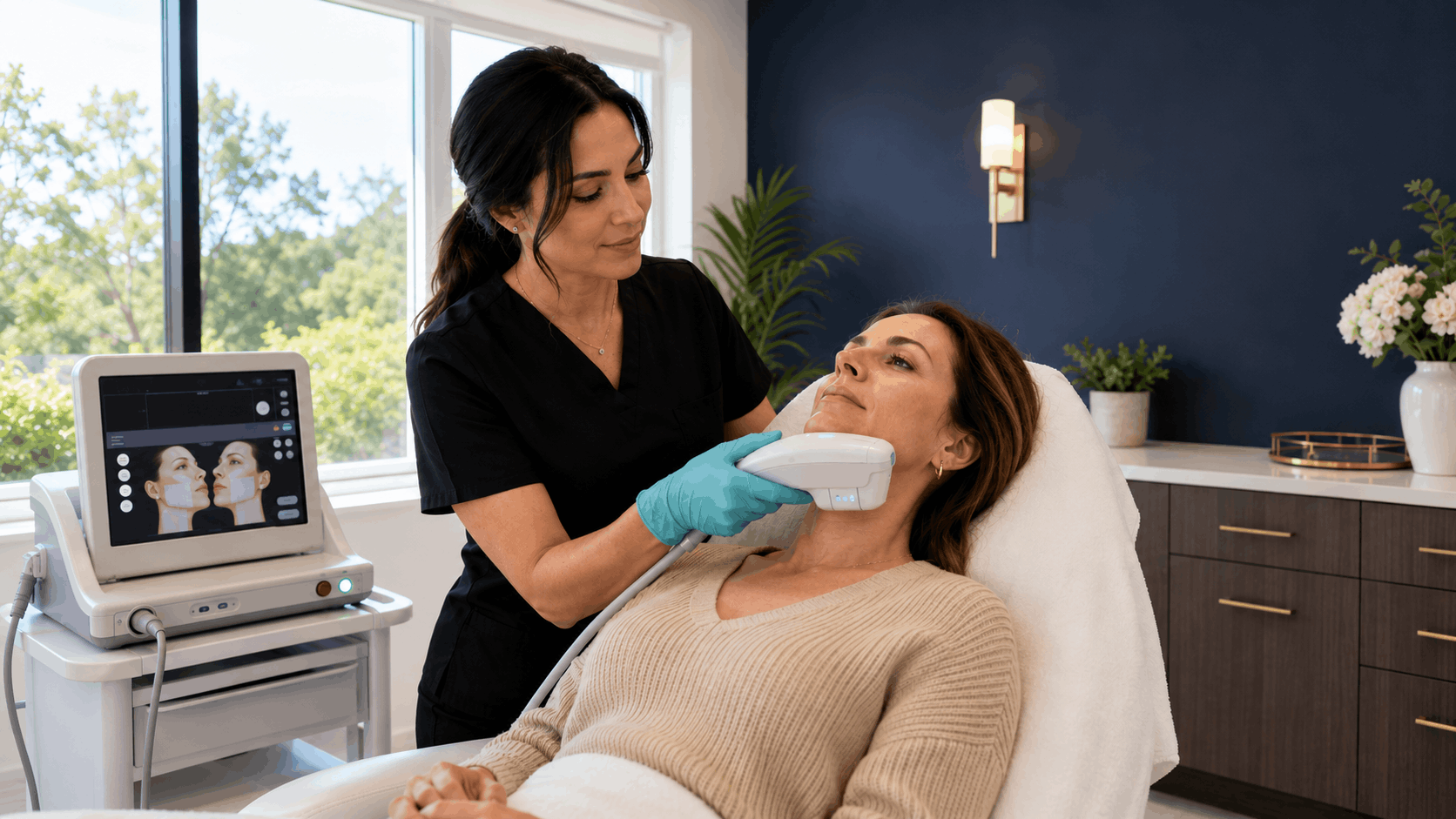
Ultherapy uses focused ultrasound technology to stimulate collagen production deep beneath the skin’s surface. Instead of surgically pulling the skin tighter, the treatment encourages the body to rebuild its own support structure gradually over time.
This approach appeals to many patients who want:
- natural-looking improvement,
- gradual rejuvenation,
- and minimal downtime.
At Mirabile M.D., advanced treatments like Ultherapy skin tightening are commonly used to improve mild to moderate skin laxity while preserving natural facial movement and expression.
Jump To:
TLDR – Quick Guide
- Ultherapy uses ultrasound energy to tighten sagging skin
- The treatment stimulates natural collagen production deep beneath the skin
- Common treatment areas include the jawline, neck, cheeks, and brows
- Results develop gradually over several months
- No surgery, incisions, or extensive downtime required
- Best for mild to moderate skin laxity
- Combination treatments may enhance overall skin tightening results
Detailed Breakdown
Why Skin Starts Sagging With Age
Skin firmness depends heavily on:
- collagen,
- elastin,
- connective tissue support,
- and skin thickness.
When we’re younger, collagen production helps maintain:
- firm contours,
- smooth texture,
- and skin elasticity.
However, collagen production naturally begins declining with age, often starting as early as the late twenties and accelerating significantly over time.
As collagen and elastin decrease, the skin becomes:
- thinner,
- weaker,
- less elastic,
- and more vulnerable to gravity.
Several external factors can accelerate this process, including:
- sun exposure,
- smoking,
- stress,
- hormonal changes,
- poor sleep,
- rapid weight fluctuations,
- and environmental damage.
Over time, the supportive structures beneath the skin begin weakening, leading to:
- jawline softening,
- cheek sagging,
- neck laxity,
- deeper folds,
- and loss of facial definition.
This deeper structural aging is why many people seek treatments that stimulate collagen rather than simply treating the surface of the skin.
What Makes Ultherapy Different?
Unlike many cosmetic treatments that primarily target surface texture, Ultherapy works much deeper beneath the skin.
The treatment uses focused ultrasound energy to stimulate foundational tissue layers often addressed during surgical facelift procedures—but without:
- incisions,
- anesthesia,
- or significant recovery time.
This is one reason ultherapy for sagging skin continues growing in popularity among patients who want:
- visible lifting,
- collagen support,
- and non-invasive rejuvenation.
Ultherapy is FDA-cleared for lifting and tightening areas including:
- the neck,
- chin,
- brow,
- and chest.
One major advantage of ultrasound technology is precision. Providers can visualize treatment layers beneath the skin, allowing targeted collagen stimulation at specific depths.
Because the treatment relies on your body’s natural collagen-building process, results develop gradually rather than looking sudden or overly dramatic.
This gradual improvement often helps patients maintain a refreshed appearance without obvious signs of cosmetic treatment.
How Ultherapy Stimulates Collagen
Collagen is one of the body’s most important structural proteins.
It helps maintain:
- firmness,
- elasticity,
- support,
- and skin resilience.
Ultherapy delivers focused ultrasound energy beneath the skin to create controlled thermal stimulation at precise tissue depths.
This controlled heating process triggers the body’s natural healing response, encouraging new collagen production over time.
As collagen rebuilds gradually, many patients notice:
- firmer skin,
- tighter contours,
- improved jawline definition,
- smoother texture,
- and mild lifting effects.
Unlike treatments that create temporary swelling or instant tightening, Ultherapy focuses on long-term collagen remodeling.
This means results often continue improving for several months after treatment.
Because collagen regeneration takes time, the improvement tends to look:
- subtle,
- progressive,
- and natural.
What Areas Can Ultherapy Treat?
Ultherapy is commonly used to improve:
- sagging jawlines,
- loose neck skin,
- heavy brows,
- drooping cheeks,
- and crepey chest skin.
The treatment is especially popular for:
- early aging concerns,
- preventative collagen support,
- and mild to moderate skin laxity.
Patients often seek treatment when they notice:
- reduced facial definition,
- skin folding around the mouth,
- softening under the chin,
- or skin that no longer feels as firm as it once did.
Patients exploring non-surgical sagging skin and skin tightening treatments often choose Ultherapy because it improves deeper structural support rather than focusing only on superficial skin texture.
Ultherapy vs Other Skin Tightening Treatments
Different skin tightening technologies target different tissue layers and concerns.
Ultherapy uses ultrasound energy to stimulate deeper support structures beneath the skin.
Other technologies focus more heavily on:
- surface tightening,
- texture improvement,
- or collagen remodeling closer to the skin surface.
For example, Forma skin tightening treatments use radiofrequency energy to improve:
- skin firmness,
- elasticity,
- circulation,
- and overall texture.
Patients seeking more aggressive collagen remodeling may also combine Ultherapy with treatments like Secret RF microneedling or Morpheus skin remodeling treatments.
These treatments target:
- texture,
- pores,
- fine lines,
- acne scarring,
- and surface rejuvenation
while Ultherapy focuses more heavily on deeper lifting and structural support.
Combination treatment plans often provide more comprehensive rejuvenation because they address multiple layers of aging simultaneously.
What to Expect During Treatment
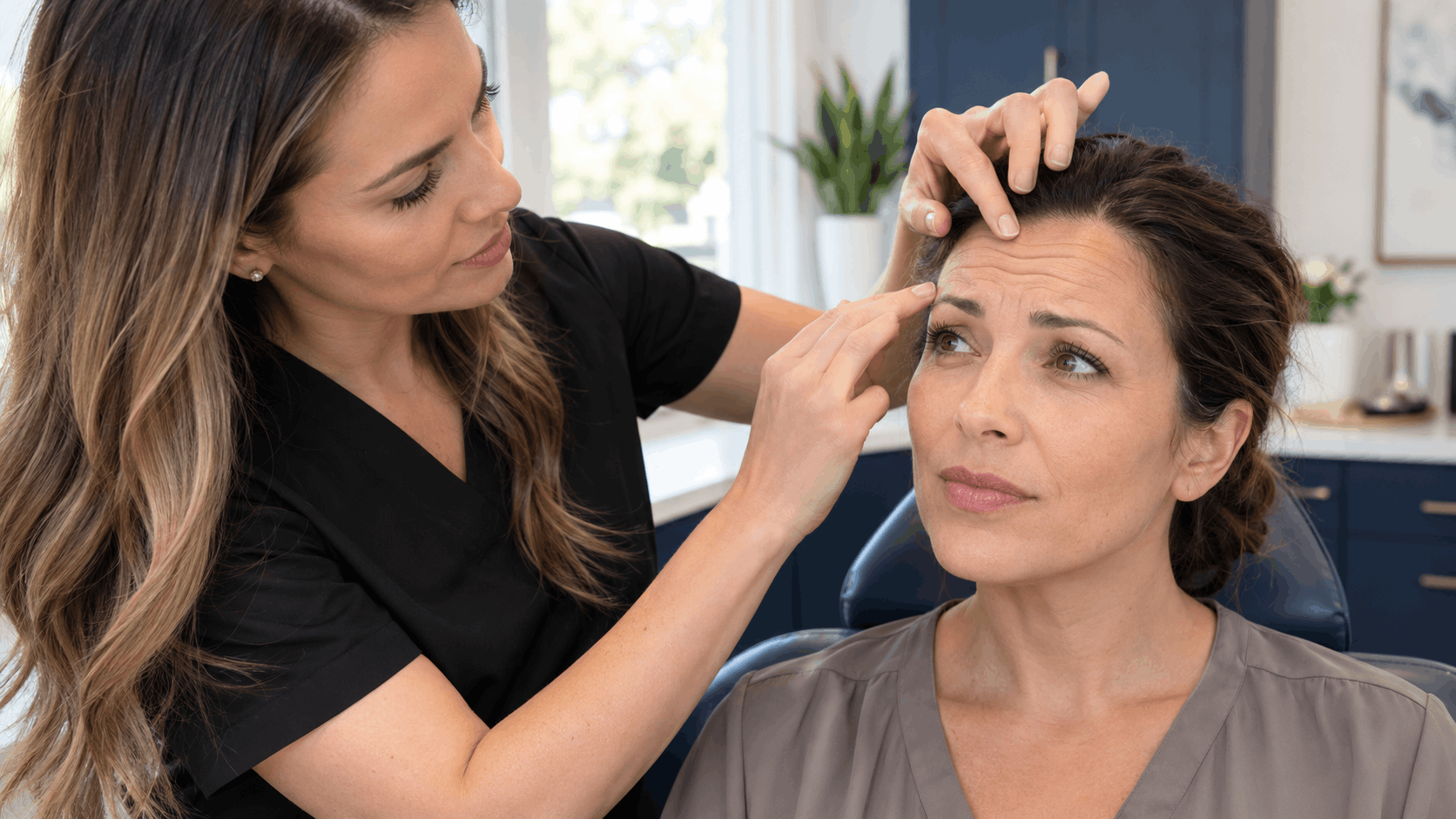
Ultherapy treatments are typically performed in-office and require little preparation beforehand.
During treatment:
- ultrasound energy is delivered beneath the skin,
- treatment depths are customized,
- and collagen stimulation occurs gradually throughout the session.
Patients may feel:
- warmth,
- tingling,
- pressure,
- or brief moments of discomfort
as ultrasound energy reaches deeper tissue layers.
Treatment time varies depending on the area being treated but often lasts:
- 30–90 minutes.
Afterward, some patients experience temporary:
- redness,
- tenderness,
- swelling,
- or mild sensitivity.
Most side effects are mild and resolve relatively quickly.
Unlike surgery, there are:
- no stitches,
- no significant bruising,
- and minimal interruption to daily activities.
Many patients return to work or normal routines immediately after treatment.
How Long Does It Take to See Results?
Ultherapy does not create instant facelift-like results.
Instead, collagen remodeling occurs gradually as the body rebuilds structural support beneath the skin.
Some patients notice subtle tightening within several weeks, but the most visible improvement usually develops over:
- two to six months.
Results continue improving as collagen production increases over time.
Because the process is gradual, the outcome tends to look:
- refreshed,
- natural,
- and age-appropriate.
This is one reason many patients prefer Ultherapy over more dramatic cosmetic procedures.
The treatment improves appearance without making patients look drastically different from their natural features.
Who Is a Good Candidate for Ultherapy?
Ultherapy is best suited for patients experiencing:
- mild to moderate skin laxity,
- early aging concerns,
- or gradual collagen loss.
Many patients begin treatment when they notice:
- jawline softening,
- mild neck sagging,
- heavy brows,
- or reduced skin firmness.
It is especially popular among individuals who:
- want preventative aging support,
- prefer non-surgical treatments,
- and want subtle, progressive improvement.
Patients with severe skin laxity or extensive sagging may require surgical lifting procedures for more dramatic correction.
A professional evaluation helps determine whether Ultherapy or combination therapies are the best fit for a patient’s goals.
Why Non-Surgical Skin Tightening Continues Growing
More patients today want cosmetic treatments that:
- preserve natural facial movement,
- involve little downtime,
- and avoid drastic changes.
That’s one reason non-invasive collagen stimulation treatments continue growing rapidly in popularity.
Rather than dramatically altering appearance overnight, treatments like Ultherapy focus on:
- healthy aging support,
- collagen maintenance,
- and gradual rejuvenation.
Many patients appreciate that these treatments help them look:
- refreshed,
- firmer,
- and more rested
without appearing overdone.
This shift toward subtle and natural enhancement has become one of the biggest trends in modern aesthetic medicine.
Ultherapy and Wrinkle Reduction
Although Ultherapy primarily focuses on lifting and tightening, collagen stimulation may also help soften:
- fine lines,
- mild wrinkles,
- and crepey texture.
Improved skin support often enhances overall skin smoothness and resilience over time.
Patients interested in broader wrinkle reduction treatments often combine collagen stimulation therapies with:
- personalized skincare,
- radiofrequency treatments,
- laser resurfacing,
- and preventative anti-aging strategies.
This layered approach helps improve:
- firmness,
- texture,
- elasticity,
- and visible aging concerns simultaneously.
Key Takeaways
- Ultherapy for sagging skin stimulates collagen using focused ultrasound technology
- The treatment helps tighten loose skin without surgery or significant downtime
- Results develop gradually as collagen rebuilds over time
- Common treatment areas include the jawline, neck, cheeks, and brow
- Ultherapy works best for mild to moderate skin laxity
- Combination therapies may enhance overall skin rejuvenation
- Non-surgical collagen stimulation continues growing in popularity for healthy aging support
FAQs
1. How does Ultherapy tighten sagging skin?
Ultherapy uses focused ultrasound energy to stimulate collagen production beneath the skin. As collagen rebuilds, the skin gradually becomes firmer and tighter over time. The treatment targets deeper support structures without surgery.
2. How long do Ultherapy results last?
Results vary depending on age, skin condition, and collagen production. Many patients enjoy improvements for a year or longer after treatment. Maintenance sessions may help preserve long-term tightening results.
3. Is Ultherapy painful?
Patients may feel warmth, pressure, or tingling during treatment as ultrasound energy is delivered beneath the skin. Discomfort levels vary depending on sensitivity and treatment area. Most side effects are temporary and manageable.
4. How long does it take to see Ultherapy results?
Some patients notice mild tightening within several weeks, but full results usually develop over two to six months. Collagen remodeling is gradual and continues after treatment. This helps results appear natural rather than sudden.
5. Can Ultherapy be combined with other skin tightening treatments?
Yes, many patients combine Ultherapy with treatments like radiofrequency microneedling and skin resurfacing for more comprehensive rejuvenation. Combination therapies may improve firmness, texture, and wrinkle appearance simultaneously. A personalized consultation helps determine the best treatment plan.